Get Full Government Meeting Transcripts, Videos, & Alerts Forever!
Get email alerts on the Elections topic
No spam. Unsubscribe anytime.
Senate education panel advances package to streamline school elections
Summary
A set of bills to clarify procedures after moving school elections to primary/general advanced out of the Senate Education Committee Wednesday, aiming to fix polling logistics, remove duplicate notice requirements and allow qualified school employees to serve as election workers.
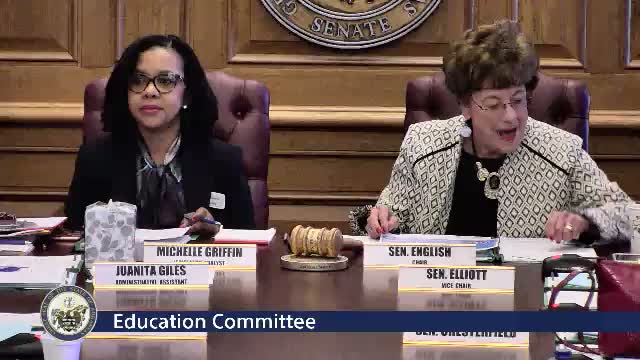
The Senate Education Committee advanced a package of bills to tidy up election procedures created when school elections were moved to the primary and general elections.
Senator Ballenger introduced Senate Bill 158, and Daniel Schultz, director of the State Election Commission, told the committee the measure “clarifies school elections can be placed on the ballot with any other election lawfully held on the same day” and fixes rare cases where voters had to travel to two separate locations because school district lines cross county lines. “This language will fix that problem, so it won't happen,” Schultz said.
A second measure, Senate Bill 233, would move legal notice responsibilities for school elections from individual school districts to county boards of election commissioners. Supporters said the transfer addresses duplication and a lack of uniformity that produced a complaint to the State Board of Education when one county failed to receive notice of a multi-county school election.
Senate Bill 235 would remove a restriction that has prevented school employees from serving as election officials in certain merged elections. Daniel Schultz said counties reported losing experienced poll workers after the restriction took effect; the bill would restore the status quo ante and allow qualified staff — for example, a bus driver — to serve as poll workers or on county boards where appropriate.
Committee members pressed sponsors on details such as whether the language covered poll workers, county election commissioners or both; Schultz answered that the change applies broadly to poll workers and related county election roles. All three measures were approved by voice vote in committee.
What happens next: Each bill will move to the Senate calendar for further consideration. The bills' text specifies administrative changes and procedural clarifications; no fiscal impacts were detailed during the discussion.