Get Full Government Meeting Transcripts, Videos, & Alerts Forever!
Get email alerts on the School Counseling topic
No spam. Unsubscribe anytime.
Senate committee advances School Counseling Improvement Act, sparking funding questions
Summary
Senate Bill 199 would revamp school counseling by setting a four-part framework (foundation, management, delivery, accountability) and encouraging counselors to spend 90% of time on direct or indirect student contact; the committee passed the bill amid concerns from superintendents about district fiscal impacts and training.
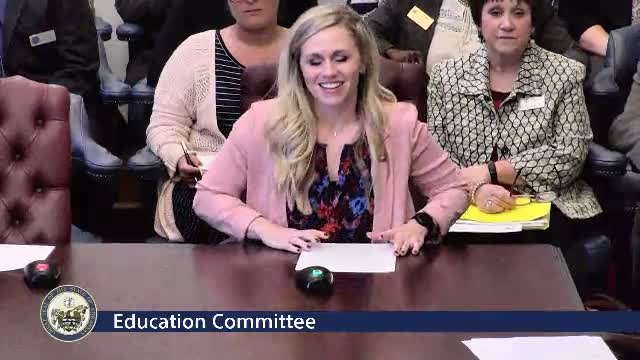
Senate Bill 199, sponsored by Senator Brianne Davis, would overhaul the state's student-services plan and set a clearer framework for school counselors' responsibilities. Stacy Smith of the Arkansas Department of Education said the bill grew from the school-safety commission report and centers on four components: foundation (vision, mission and program goals), management (data-driven planning), delivery (emphasis on direct and indirect services) and accountability (annual review).
Smith described a target that counselors spend roughly 90% of their time on direct and indirect student contact, limiting administrative tasks to about 10%. The department and Ivy Pfeffer (Department of Education) told senators that counselor licensure programs align with national CACREP standards and include coursework in crisis response, counseling theories and techniques. "Our current licensure programs for counselors are aligned to national standards," Pfeffer said.
Supporters included Terry Callaway, president of the Arkansas School Counselors Association, who said the organization backs the bill and that more counselor time with students would enable earlier identification and referral: "Given the time to be able to work with those students will help us to know those students well enough to maybe be able to identify those problems earlier on and be able to make those referrals out." Opponents or cautious witnesses — including Richard Abernathy of the school-administrators group and several superintendents — said the bill could shift duties and create personnel costs for districts. One Clarksville superintendent urged the committee to study and fund any necessary district-level increases, calling the effective change from 75% to a 90% target a substantial personnel impact.
Senators pressed the department for details about how districts would absorb administrative responsibilities now handled by counselors, the availability of professional development and whether small or remote districts could meet the new target without additional funding. The sponsor said she is willing to lead conversations about funding with ADE and the governor's office.
The committee moved the bill with a 'do pass' motion and advanced it by voice vote; committee members requested continued stakeholder engagement and additional fiscal conversations prior to calendar scheduling.