Get Full Government Meeting Transcripts, Videos, & Alerts Forever!
Get email alerts on the Budget Roundup topic
No spam. Unsubscribe anytime.
Committee hears fee hikes, transportation transfers and wellness benefit cuts in budget briefings
Summary
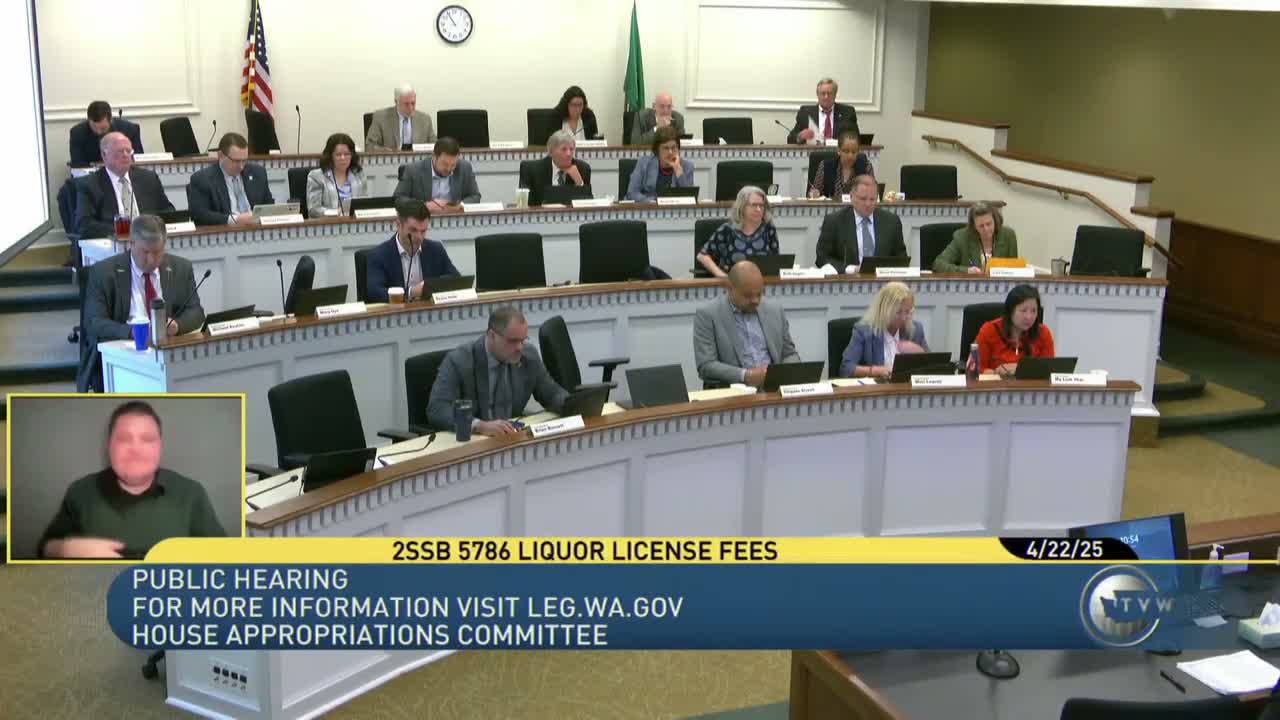
House Appropriations received staff briefings and public comment on SSB 5786 (liquor license fee increases), SB 5802 (transportation‑account transfers), and SB 5807 (eliminating SmartHealth wellness incentives); small‑business and union witnesses urged caution or opposed aspects of the bills.
After concluding hearings on SSB 5393 and SSB 5785, the committee heard staff briefings and public testimony on a set of other budget measures.
Matt Mazerhart briefed Second Substitute Senate Bill 57 86, which raises most liquor license, permit and endorsement fees (many by roughly 50% by staff description) and is estimated to increase general‑fund revenue by about $9 million per year. Craft distillers, hospitality groups and grocery retailers testified in opposition, warning the increases would disproportionately hurt small operators and that some grocery licensing lines would experience substantially larger percentage increases; Carolyn Logue of the Washington Food Industry Association and Crystal Leatherman of the Washington Retail Association urged more equitable treatment and study before implementation.
Andy Toulon briefed SB 58 02, a bill that shifts resources between accounts used for operating and transportation budgets, accelerates repayment of deferred bridge tax deferrals and would dedicate parts of sales tax to the multimodal transportation account in future years. Toulon summarized a multi‑year NGFO impact that is positive in the near term and negative beginning in FY28, with an illustrative four‑year negative impact of roughly $581 million.
David Pringle briefed SB 58 07, which would eliminate the SmartHealth wellness program in the PEBB and SEBB systems as of Jan. 1, 2028, removing incentive payments and saving an estimated $7.5 million annually; unions opposed the change in testimony, saying the $125 incentive matters to lower‑wage state employees and that removing the benefit without a negotiated replacement would cut compensation.
Ending: The committee did not vote on these measures during the hearing. Public testimony emphasized the importance of studying business impacts (for fee increases), understanding long‑term transportation revenue implications, and negotiating changes to employee benefits rather than unilaterally removing them.