Get Full Government Meeting Transcripts, Videos, & Alerts Forever!
Get email alerts on the Privacy And Communications topic
No spam. Unsubscribe anytime.
Montana bill would add 'digitally fabricated' images to privacy and extortion statutes
Summary
Rep. Jill Konower told the Senate Judiciary Committee HB 514 would broaden privacy and communications offenses to criminalize publishing or threatening to disclose real or digitally fabricated images when intended to intimidate, extort or harass; proponents cited sextortion and teen suicides, defenders urged coordination with Attorney General definitions.
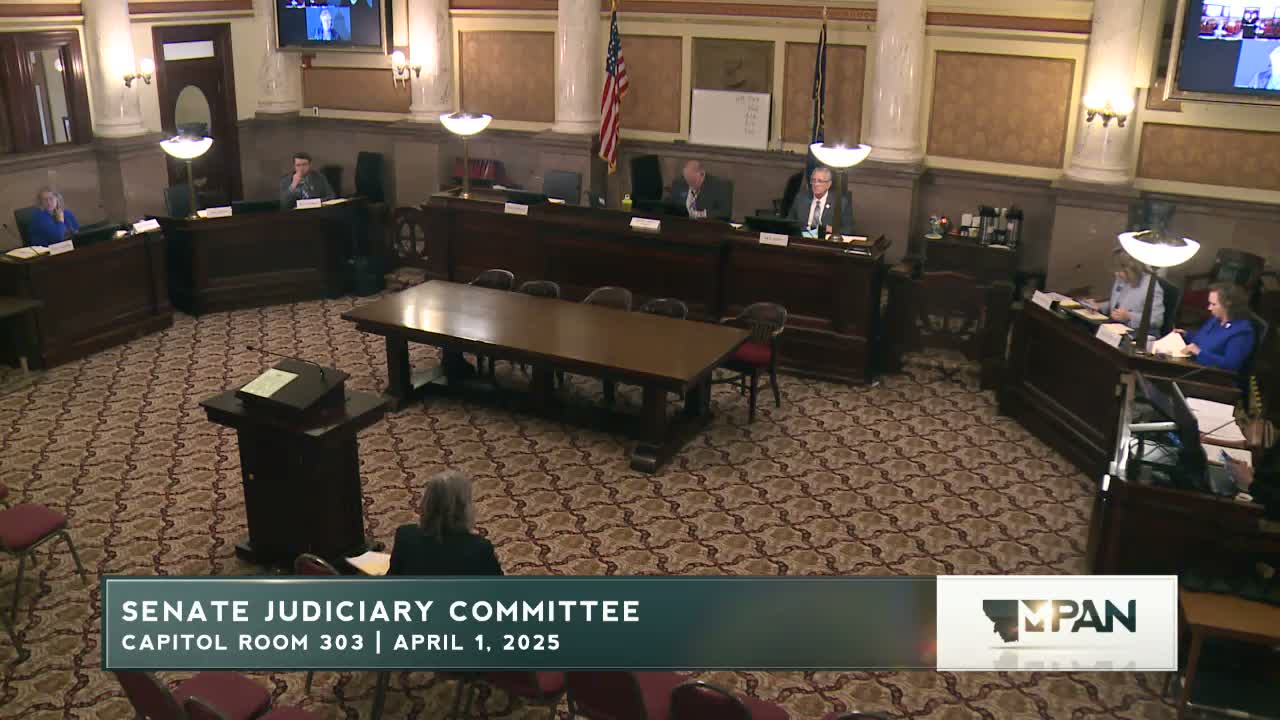
Representative Jill Konower opened a hearing on House Bill 514, telling the Senate Judiciary Committee the measure would expand Montana’s privacy-and-communications offenses to cover publishing or threatening to disclose real or digitally fabricated images “with the purpose to terrify, intimidate, threaten, harass, or injure, or to obtain money, or other valuable considerations.”
Konower said the change aims to modernize statutes to address sextortion and digitally fabricated media affecting school-aged children. “Basically, we want to make sure that we're not allowing people to get away with this in our statutes,” she said, adding the bill sets a low first-offense penalty intended to allow schools and local officials to flag incidents early.
Brian Thompson, testifying for the Montana County Attorneys Association and the Montana Sheriffs Peace Officers Association, urged the committee to pass the bill, describing the issue as a developing area where people can be exploited online and asserting that the acts should be illegal. Don Cape of the Coalition for Safety and Justice and a parent speaker called the bill “long overdue,” supporting a low threshold for first offenses to protect minors.
Anna Shchmelinin recounted two Montana teens who killed themselves after becoming sextortion victims and urged lawmakers to pass HB 514. The committee allowed informational testimony from Natalie Smitham, chief financial officer for the Department of Corrections, who said she was available to answer fiscal questions. Brian Smith of the Office of the Public Defender appeared informationally and told the committee the office had not run historical charge searches and could not supply prevalence data; he said many cases involving youth are currently charged under other statutes or handled in youth court.
Committee members asked about how frequently offenses are charged and how cases involving minors would be prosecuted. Konower and Smith said intent is central: consensual exchanges later misused may become crimes when followed by extortion attempts. The public defender and committee members emphasized the difficulty of proving intent and the role of youth-court processing where minors are involved.
No formal action or vote was taken; the hearing was closed for the record. The sponsor said she will provide materials from the Attorney General’s office to staff to coordinate definitions of “digitally fabricated” media with other bills and statutes referenced in the session.