Get Full Government Meeting Transcripts, Videos, & Alerts Forever!
Get email alerts on the Higher Education Aid topic
No spam. Unsubscribe anytime.
Students and colleges press committee to protect Washington College Grant amid proposed eligibility cuts
Summary
Substitute Senate Bill 5785 would change Washington College Grant and College Bound rules, cutting or reducing awards for some private institutions; administrators, students, and advocates warned of abrupt harm to low‑income and first‑generation students and asked for transition planning or exemptions.
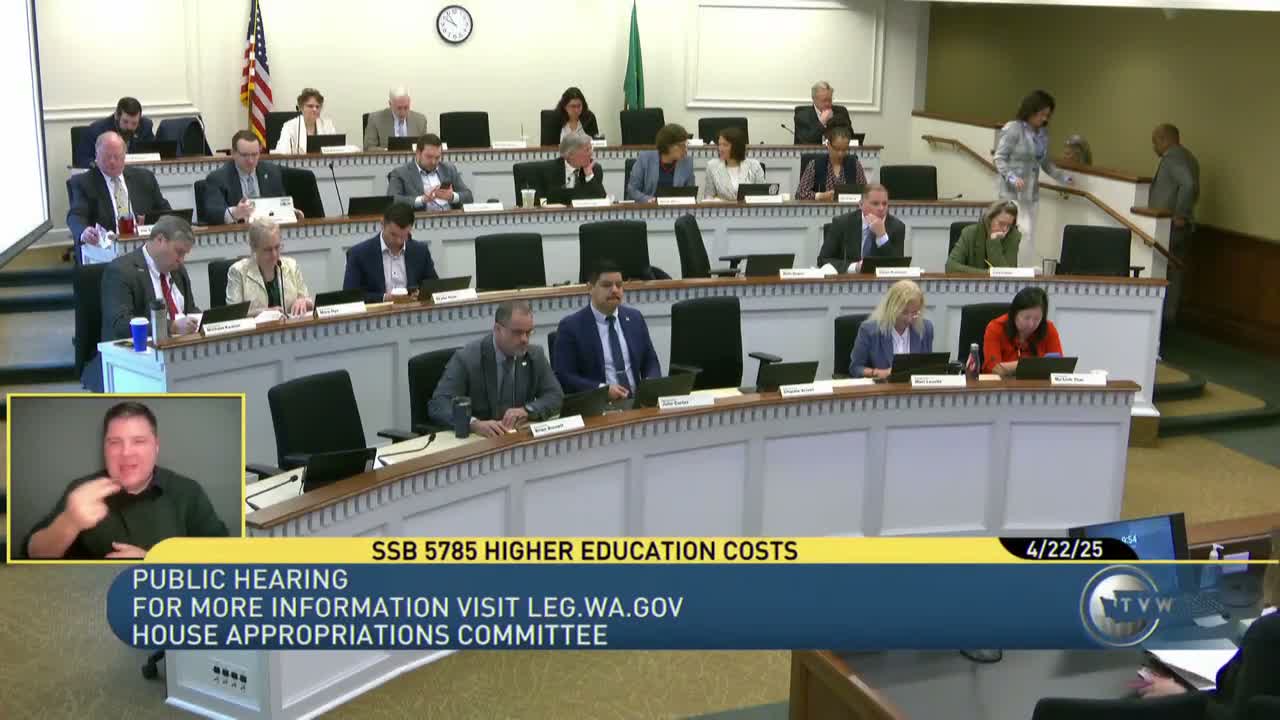
Committee staff, Kate Henry, briefed members on Substitute Senate Bill 57 85, outlining proposed changes to the Washington College Grant (WCG) and College Bound programs: adjustments to median family income thresholds, reductions in some award amounts, and a striker that would eliminate WCG awards for private for‑profit two‑ and four‑year institutions beginning in fiscal year 2027, with other sector and apprenticeship adjustments phased in later years.
Witnesses from public institutions, private career colleges, accrediting bodies, students and student leaders filled the public record. Christopher Comer (DigiPen) and other institutional leaders warned that many students at specialty and career colleges rely heavily on WCG to remain enrolled and finish programs, and urged delay or exceptions for institutions with high completion and employment outcomes. Casey Clark (Director of Financial Aid, Diver's Institute of Technology) described strong job outcomes for graduates in commercial diving and noted heavy WCG dependence among veterans and other students.
Students and alumni gave personal accounts of how the grant made education possible. Multiple student speakers said an immediate elimination would force withdrawals mid‑program, increase borrowing and disproportionately harm low‑income and first‑generation students. Representatives of accrediting organizations urged evaluating institutions by outcomes and accreditation rather than IRS tax status as a proxy for eligibility.
Supporters of the bill, including representatives from Disability Rights and The Arc (in other hearings and contexts), framed some changes as preserving aid for public not‑for‑profit institutions while noting the policy tradeoffs involved. Kate Henry noted the fiscal modeling is complex: changes across the WCG and College Bound programs interact and require new modeling runs to estimate net impacts.
Ending: The hearing closed after broad testimony and no committee vote. Testimony emphasized the need for transition timelines or amendments to avoid abrupt harm to students who have planned their education around existing awards.