Get Full Government Meeting Transcripts, Videos, & Alerts Forever!
Get email alerts on the Rhc Closure topic
No spam. Unsubscribe anytime.
Family members, staff and self-advocates clash over bill to close Rainier School
Summary
A lengthy public hearing on Substitute Senate Bill 5393 produced sharply divided testimony: family members and long‑time Rainier staff warned closure risks deaths and loss of specialized care, while disability advocates and community providers said community-based supports can serve many residents safely with proper planning.
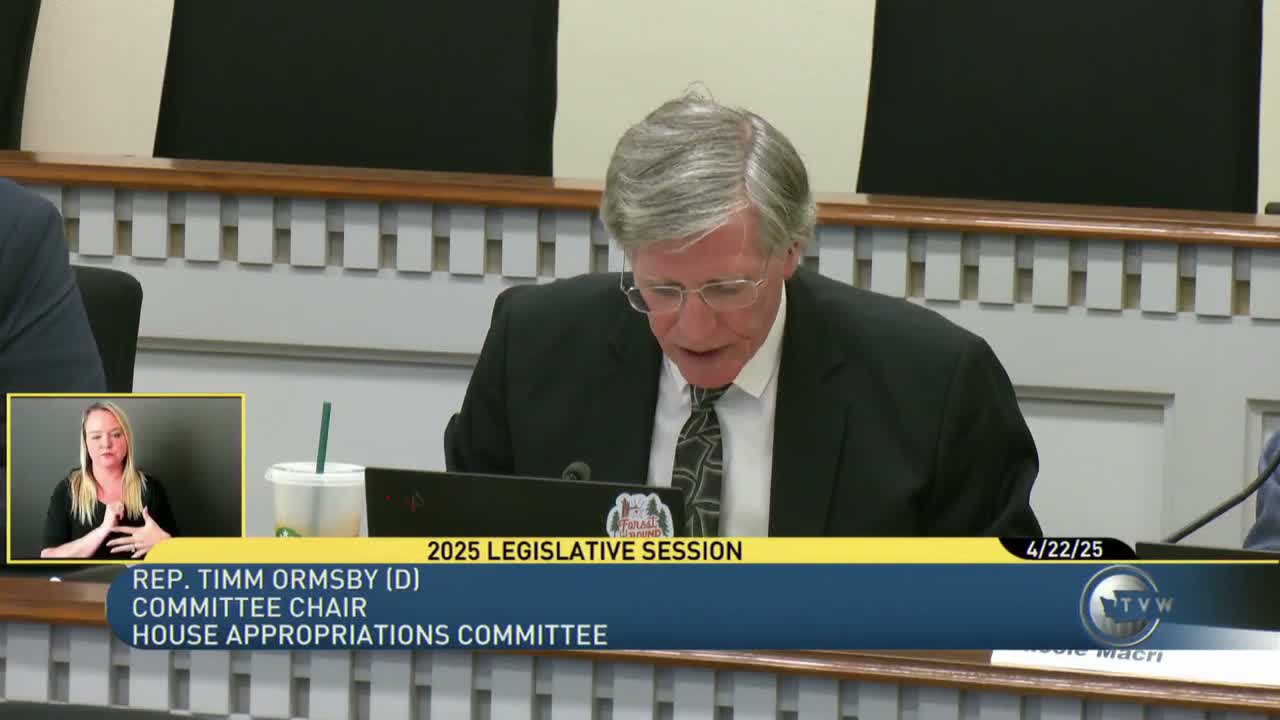
Chair Ormsby opened a public hearing on Substitute Senate Bill 53 93, which directs the Department of Social and Health Services (DSHS) to close Rainier School in Buckley by June 30, 2027 and bar new admissions. O'Mear Harrington, staff to the committee, said Rainier serves as an intermediate care facility with 58 long‑term and 13 short‑term residents and that the bill requires DSHS to offer state‑operated living alternatives (SOLAs), supported living, adult family homes or space at other RHCs per resident preference.
The committee’s fiscal staff, Brian Way, told members the DSHS fiscal note assumes 50% of Rainier residents would move to other RHCs, 25% to supported living and 25% to SOLAs and projected a net savings of about $18.1 million over four years after accounting for operating and revenue changes. Way noted capital and closure costs estimated at $2.4 million and a projected decline in ICF tax revenue of roughly $5.9 million over four years.
Testimony divided sharply. Long‑time Rainier staff and family members recounted losses and safety concerns after moves to community placements. Becky Carter, who said she has worked at Rainier School for 34 years and is a guardian of a person in a SOLA, told the committee: “Clients are people. They are not numbers. . . People’s lives are in your hands.” Several witnesses said residents moved before they were ready suffered serious harm and, in some instances, died shortly after relocating. Mike Kastrzemski (Washington Federation of State Employees) said SOLA West, a community option, had been closed due to budget cuts and warned that “we have less capacity today than we did a week ago.”
Guardians and Action DD representatives argued the state lacks beds and community capacity to absorb Rainier residents. Micah Velasquez, an attorney for more than 80 guardians, said closing Rainier would eliminate about one‑third of ICF‑licensed beds in the state, leaving people waiting “in hospitals,” and questioned the fiscal note’s placement assumptions.
Advocates for community placements and some providers urged the committee to move forward with phased transitions. Stacy Dim, executive director of The Arc of Washington State, cited Rainier’s declining census—from roughly 318 in 2018 to about 84 now—and said community living offers individualized plans and additional funding. Supporters recounted successful transitions, including individuals who moved from institutional settings to supported living and “thrived,” and cited civil‑rights and Olmstead obligations.
Committee members pressed staff on fiscal assumptions and acuity modeling; Representative Penner asked whether DSHS’s use of statewide averages understates the cost of serving high‑acuity Rainier residents. Staff said the fiscal note used forecasted averages and did not model individual acuity tiers.
The hearing produced numerous personal accounts on both sides but no formal action. Chair Ormsby closed public testimony and requested subsequent staff briefings on other bills. The record reflects deep disagreement about capacity, risk, cost and the timing of any closure or transition process.
Ending: The committee concluded the hearing without a vote; members will have opportunity to consider amendments and fiscal details in subsequent briefings and executive session.