Get Full Government Meeting Transcripts, Videos, & Alerts Forever!
Get email alerts on the Wastewater Petition topic
No spam. Unsubscribe anytime.
Lennox council rejects petition seeking referendum on wastewater deal with state corrections
Summary
After legal advice that administrative actions are not subject to referendum under SDCL chapter 9-20, the Lennox City Council voted to reject a petition calling for a public vote on the council’s agreement to accept wastewater from a proposed Department of Corrections facility; residents urged a public vote and raised concerns about long-term costs, infrastructure and local impacts.
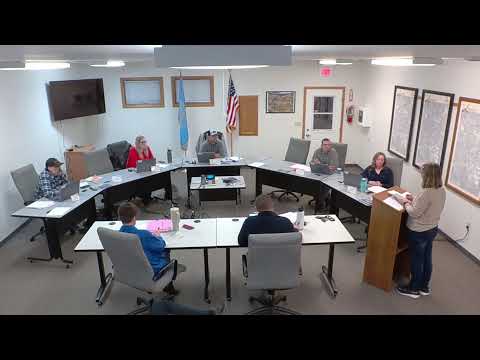
The Lennox City Council voted to reject a petition that would have referred the council’s agreement to accept wastewater from a proposed South Dakota Department of Corrections (DOC) facility to a public referendum.
City counsel (Speaker 3) told the council that municipal referenda are governed by SDCL chapter 9-20 and that SDCL 9-20-19 makes administrative decisions ineligible for referendum; on that basis counsel recommended rejecting the petition for failing to meet the statutory requirements. The council then made a motion to reject the petition and the motion carried.
The petition prompted a lengthy public-comment period in which residents pressed the council for greater public input and raised technical and fiscal concerns. James Gillen (Speaker 1) told the council, “if you support taking wastewater from the proposed penitentiary site, you're basically saying that you're supporting the penitentiary being built in Lincoln County,” and urged that the decision be put to a public vote. A resident identified as Lisa (Speaker 10) said, “I think it should be up to the people of the town to vote,” and several other residents echoed calls for a referendum.
Residents and commenters asked about specifics that were not yet finalized, including routing for a proposed pipeline, potential contaminated soil along parts of the route and whether city infrastructure and emergency services could absorb long-term demands. Joe Duncan (Speaker 5), citing pipeline experience, asked whether the city would be responsible for lift stations and expansion if the DOC increased demand; council members and staff said contract escalators and later agreements would be required for any larger expansions.
City Official (Speaker 12) said the engineer and staff have reviewed the projected upgrades and that the agreement is expected to bring approximately $10,500,000 in funds tied to the new industrial customer; the official noted that certain line-item estimates (about $4,500,000 mentioned in staff notes) and project plans would be public and available for review. Staff and council members emphasized that the city engineer must review any construction plans before work proceeds and that, according to the agreement, the DOC would be responsible for pipeline placement and for costs associated with that routing.
Residents raised procedural concerns about delegating the decision without a public vote and urged a formal, written plan for spending any funds received; one commenter asked whether the city could later terminate the agreement, and staff replied that the contract includes parameters that would allow the city to cut service or terminate for violations.
After hearing public comment and legal advice, Councilmember (Speaker 4) moved to reject the petition for lack of applicability under state statute; the motion was seconded and carried. The council therefore left intact its administrative agreement to accept the DOC as a sewer customer while rejecting the petition seeking referral to a public vote.
The council did not adopt any new policy directing a public vote on the underlying agreement; staff said project-specific plans, engineering reports and budget line items would be made available and that future meetings and budget processes would provide additional public input opportunities.