Get Full Government Meeting Transcripts, Videos, & Alerts Forever!
Get email alerts on the Wastewater Infrastructure topic
No spam. Unsubscribe anytime.
Lennox council reviews fiscal plan for Department of Corrections wastewater connection; asks staff to negotiate terms
Summary
City leaders reviewed a fiscal analysis of a proposed sewer connection to a Department of Corrections facility that assumes payoff of three SRF loans, a $9,000/month upfront user fee and one added FTE; council directed staff to negotiate an agreement in principle and return with terms for final action.
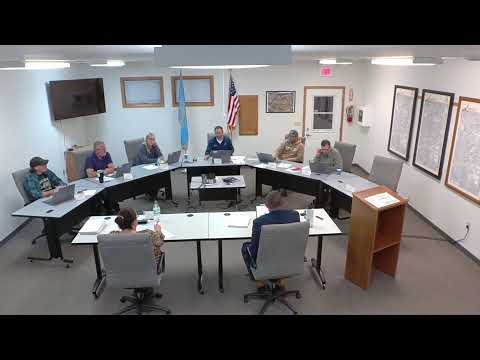
Lennox city leaders spent the longest portion of their meeting reviewing a fiscal analysis and operational impacts of a proposed wastewater connection between the town’s sewer system and a Department of Corrections (DOC) facility.
Staff outlined the analysis and its key assumptions: use of upfront cash to retire three state revolving fund loans (identified in the packet as Clean Water 4, Clean Water 5 and Clean Water 7); receiving a $9,000‑per‑month user payment up front instead of amortizing it over 30 years; adding one full‑time equivalent in the sewer fund; and including $150,000 a year of increased depreciation for capital improvements. Based on those assumptions staff estimated a net operating increase of nearly $200,000 per year (about $350,000 a year when depreciation is removed).
The presentation stressed timing: the town would not see contract revenue until the DOC facility opens—staff identified 2028 as the earliest feasible date—and asked whether the council wanted staff to pursue a final agreement in principle before returning for final action at a later meeting. Council members signaled support for continuing negotiations but repeatedly said they needed to see deal terms and binding fiscal details before voting to approve any contract.
Members questioned how the upfront funds would interact with existing bonded debt and surcharges on residents’ bills. Council discussed three approaches raised during the meeting: (1) use the upfront cash to pay off the bonds immediately; (2) invest the funds and use investment earnings to cover annual debt service while eliminating the surcharge on customer bills; or (3) leave the loans in place and draw from the invested funds to make scheduled payments. Staff said bondholders generally require security that covers obligations and recommended reviewing bond documents and DNR guidance before committing to a repayment structure.
Operational capacity during extreme rain events was a central concern. Staff reviewed a recent multi‑day event in which the plant handled about 10.4 million gallons; DOC’s estimated 200,000 gallons per day would add roughly a 6% increase to that event’s inflow, a change staff described as modest but not negligible. Council members pressed staff to prioritize on‑site redundancy: several members urged buying spare pumps and mixers, citing long lead times for replacements.
Residents and visitors asked questions during the discussion. John Wayford (300 North Cherry) asked whether residents would still pay the surcharge if the town did not pay off loans and instead invested the funds; council members explained multiple possible approaches and reiterated that legal and bond constraints determine what the town can do.
Council did not vote on a contract tonight but directed staff to pursue negotiations and return with a proposed agreement in principle and firm fiscal terms for final consideration (staff indicated they would aim to present a draft by the council’s November 12 meeting).