Get Full Government Meeting Transcripts, Videos, & Alerts Forever!
Get email alerts on the Doc Sewer Connection topic
No spam. Unsubscribe anytime.
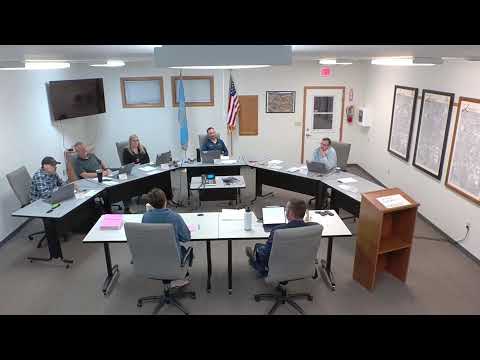
Lenox council approves sale of wastewater capacity to state for potential new prison despite strong public opposition
Summary
The Lenox City Council voted to approve an agreement to sell wastewater-treatment capacity to the South Dakota Department of Corrections, accepting an upfront capacity purchase and future monthly and volume payments. The decision drew extensive public comment on environmental, economic and transparency concerns.
The Lenox City Council voted tonight to approve an agreement with the South Dakota Department of Corrections to purchase wastewater-treatment capacity intended to serve a proposed new men’s prison.
The contract includes a $10,500,000 upfront capacity purchase, a base monthly payment of $52,500, and volume charges described in the staff presentation (staff said the plan anticipates 175,000–200,000 gallons per day charged at $6 per thousand, and $9 per thousand for flows above 200,000 gallons). Ryan Brunner with the governor’s office told the council the payment structure reflects ARPA funding rules and that ARPA funds must be under contract this calendar year.
City staff presented the agreement as an opportunity to upgrade Lenox’s wastewater treatment plant and reduce long-term rate pressures on local water customers. Nate, city staff, told the council the plant would receive engineering upgrades, and staff recommended approval after months of negotiations with state engineers and attorneys.
Opponents at the meeting raised concerns about environmental impacts, long-term liability and local control. Daryl Hammond argued the pipeline and new flows could harm private wells and farmland and said rural neighbors ‘‘do not feel like their livelihoods are being protected.’’ Jean Kimon, a longtime resident, said the town’s quality of life could be harmed by odor or other effects. Josh (Kenton, South Dakota) called the $10.5 million payment a ‘‘bribe.’’ Ryan Brunner acknowledged litigation is pending in a related Harrisburg matter and said the state expects monthly payments to start only when the prison is operational and that the upfront payment would be treated as a capacity purchase rather than a construction reimbursement.
Council members said they had spent months on site visits and technical review. Supporters on the council argued the capacity purchase would be revenue-neutral from the state perspective, provide funds to offset roughly $4.5 million in plant upgrades, and offer a way to avoid substantially higher water rates for Lenox residents as the plant is expanded. Opponents said accepting capacity risks future relocation of the prison closer to the town and that transparency from the Department of Corrections has been insufficient.
The motion to approve the agreement carried by voice vote. The council did not attach additional conditions on reimbursement or relocation in the motion recorded at the meeting. Staff said the agreement includes cooperative language on gas-mitigation measures and that several technical options (grinder pumps, aeration, chemical treatment) remain to be finalized by engineers.
Next steps: staff will finalize design details (HDR was mentioned as having prepared draft design work), pursue any required easements, and begin contract administration in coordination with state representatives.