Get Full Government Meeting Transcripts, Videos, & Alerts Forever!
Get email alerts on the Wastewater topic
No spam. Unsubscribe anytime.
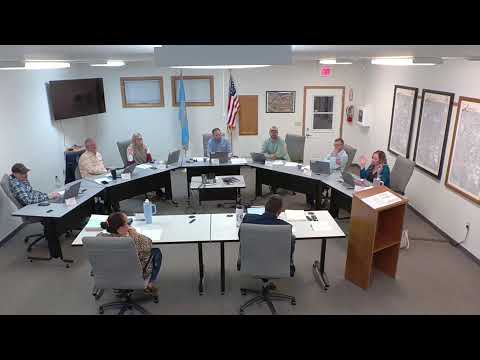
Lennox council hears feasibility questions, community concerns over proposed DOC sewer connection
Summary
Council members heard staff analysis that routing Department of Corrections wastewater to the Lennox treatment plant is feasible but raises long-term capacity, odor-control and contract-term concerns; no formal action was taken.
The Lennox City Council spent the longest portion of Tuesday’s public meeting discussing a proposed plan to accept wastewater from a Department of Corrections (DOC) facility. Staff reported ongoing talks with DOC and shared consultant projections showing Lennox’s plant could reach design capacity under an aggressive 3% annual growth scenario by about 2044.
Council members and staff raised several concerns that would need to be resolved before any agreement. Staff noted options to mitigate hydrogen sulfide and odor — including chemical injection at the receiving plant — but said a chemical supplier with direct experience (Hawkins) had not been able to attend the meeting. Council members asked for follow-up from Hawkins and for comparisons to other nearby systems such as Sioux Falls and Brandon that operate long force mains.
Speakers also pressed for financial clarity. Staff suggested the DOC would provide funding should the city move forward, and recommended any net revenue be reserved to pay for maintenance and future expansions. Council members sought a side-by-side depreciation schedule showing how increased flow would affect operations and capital needs and asked what portion of additional revenue the city could reasonably retain for plant upkeep.
Long-term contract terms were a central point of contention. One council member asked how long Lennox could be obligated under an agreement — whether there would be termination clauses or escalators to protect the city if the prison’s population changed or the community experienced faster-than-expected growth. Staff said they would return with proposed contract language that addresses expansion triggers, cost escalators and other protections.
The council scheduled community engagement: a public forum and Q&A hosted by the Citizens Academy to allow residents to ask technical questions and to gather public input before a contract is drafted. Staff emphasized there was no action on the agenda item and that additional technical and financial details — including odor-control recommendations from the chemical supplier and a clear depreciation/projection analysis — need to be provided before council considers moving forward.