Get Full Government Meeting Transcripts, Videos, & Alerts Forever!
Get email alerts on the Wastewater topic
No spam. Unsubscribe anytime.
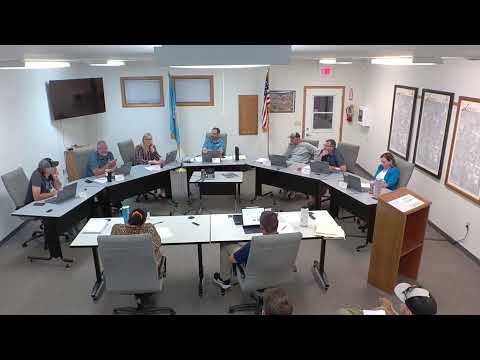
Lennox council weighs wastewater deal with Department of Corrections after technical memo estimates $4.5 million in upgrades
Summary
Council members reviewed a technical memorandum and asked for further analysis after staff said preparing the town’s treatment plant to accept DOC wastewater would require about $4.5 million in upgrades, added storage of roughly 3.7 million gallons and operational changes; staff expects a final go/no‑go analysis by the 15th.
Lennox officials continued deliberations over a proposed arrangement to accept wastewater from the Department of Corrections, with staff presenting a technical memorandum that estimated capital improvements of about $4,500,000 to ready the town’s treatment plant.
The presentation, introduced by Mitch, named three priority upgrades — expanded equalization storage, aeration/mixing improvements and expanded sludge handling — and included a capacity chart that showed the DOC inflow would nearly double the town’s average daily load. "Total of about 4,500,000.0 is what we feel," Mitch said while reviewing cost estimates. Staff also described an equalization expansion the project team estimated at about 3,700,000 gallons to provide emergency storage and blunt peak inflows.
Council members asked whether the upgrades would increase continuous treatment capacity. Staff answered that the proposed work would expand emergency storage and improve process flexibility but would not automatically raise the plant’s long‑term continuous treatment ceiling without a larger rebuild. "It wouldn't change continuous treatment capacity; it would change our emergency storage capacity," staff said.
Members pressed on operational consequences: drying beds and sludge handling will see increased volumes if DOC waste arrives, creating odor risks and additional maintenance. Kyle, speaking on operations, warned that open drying beds can release odors and that a mechanical press would be more effective long term. Staff said odor mitigation and improved screening will be part of the next technical memo and recommended an on‑site tour of an advanced SBR facility to inform design choices.
The council also discussed pretreatment and liability: staff said DOC would remain responsible for pretreatment up to the point wastewater enters the city system, and the city retains the right to inspect and to shut off flows that threaten plant compliance. Councilor questions covered long‑term replacement cycles (20–30 years), potential DOC contributions for future expansions, and how choosing an advanced SBR versus retrofits would affect costs.
Staff committed to provide a written feasibility memo from Xylem (technical vendor) and a final recommendation by the 15th. The council did not take a formal vote on the DOC connection during the meeting and directed staff to continue due diligence.