Get Full Government Meeting Transcripts, Videos, & Alerts Forever!
Get email alerts on the Special Events Fund Reform topic
No spam. Unsubscribe anytime.
Yarmouth committee moves to tighten special‑events grant rules, favor off‑peak and accountability
Summary
The Town of Yarmouth committee agreed to rewrite its special‑events funding solicitation to tighten eligible expenses, require stronger documentation, favor off‑peak events and limit long‑term automatic funding for for‑profit organizers; members set a schedule to finalize changes in August and to launch in September.
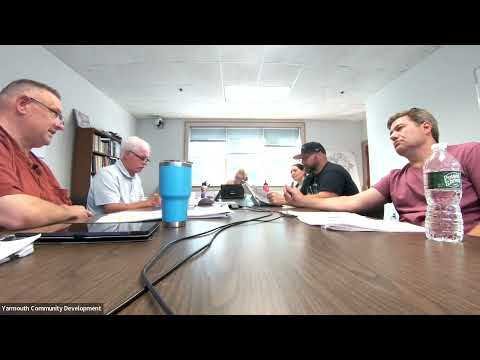
The Town of Yarmouth committee on a July meeting debated substantive revisions to the town's special‑events grant program, aiming to make awards more targeted, auditable and tied to measurable impact.
Committee members narrowed the purpose of the fund into two principal tracks: community events intended to provide ongoing community benefit, and economic development or seed grants aimed at launching new events. Speaker 2 said the committee wants to avoid permanent subsidies, proposing limited‑duration ‘seed’ grants for for‑profit events (an example discussed was three years) so organizers have incentives to become self‑sustaining.
Why it matters: members flagged that the program has become more competitive and less consistent over time and that better rules could steer limited public funds toward events that increase shoulder‑season visitation and demonstrate financial management. The committee reviewed sample evaluation criteria that included visitor reach, marketing strategy, operational feasibility, financial management and community/cultural significance; several members supported translating narrative applications into a structured questionnaire to produce apples‑to‑apples comparisons.
On eligible expenses, the group agreed to clarify limits on reimbursements. Speakers discussed treating marketing, operational costs and police/fire details differently; common ineligible items under consideration included airfare, hotel, alcohol and cash payouts lacking invoices. The committee stressed stronger documentation and third‑party cost estimates for larger line items. As Speaker 3 put it when discussing reimbursement rules, applicants would normally be reimbursed after they submit final receipts and reports.
Budget and award limits were another focus. The committee reviewed the existing pool (discussion referenced roughly $140,000 budgeted and an updated spreadsheet near $150,000–$190,000 depending on accounting items) and weighed approaches to cap awards: per‑event flat maximums, limits as a share of an applicant’s total budget, or limits as a share of the total funds available. Members repeatedly returned to one principle: applicants should retain “skin in the game” and not receive full, ongoing operational support indefinitely.
Members also raised an unresolved item with the selectmen’s separate $50,000 allocation. Speaker 5 warned, “we don't have to give them the money,” underlining committee discretion if the selectmen's line item is intended to support one event. The committee asked staff to confirm whether the selectmen’s $50,000 is a separate line item and whether applicants may access both pools.
Process changes agreed: the group favored converting narrative questions into a form or structured questionnaire, requiring clearer itemized budgets, asking for third‑party estimates for large expenses (for example tent rentals or police details), and holding a kickoff session or video explaining changes to applicants. The committee set a tentative schedule to finalize edits at an August meeting (target Aug. 13) and to launch the solicitation in early September (target Sept. 4), with flexibility to add a meeting if finer wordsmithing was needed.
The committee will continue interviews with applicants during evaluation to clarify budgets and capacity and plans to involve the Chamber of Commerce for outreach. The meeting closed after the chair moved to adjourn and members seconded the motion.
Next steps: staff will confirm the exact fund totals and the treatment of the selectmen’s $50,000 allocation, circulate the revised application & rubric for review ahead of the August meeting, and prepare outreach materials for the solicitation launch.