Get Full Government Meeting Transcripts, Videos, & Alerts Forever!
Get email alerts on the Tax Increment Financing topic
No spam. Unsubscribe anytime.
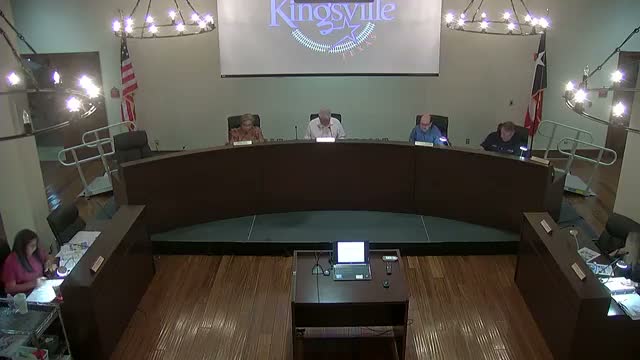
Kingsville hears proposal for Tax Increment Financing Reinvestment Zone No. 3
Summary
At a Nov. 20 public hearing the City Commission heard a consultant present a proposed 200‑acre Tax Increment Financing (TIF) Reinvestment Zone No. 3 that would direct 50% of future real‑property tax increments for up to 30 years toward public improvements intended to attract retail, hotel and commercial development; second reading is set for Dec. 9.
The Kingsville City Commission held a public hearing Nov. 20 on an ordinance to create Reinvestment Zone No. 3 under Chapter 311 of the Texas Tax Code, a tax increment financing (TIF) district proposed for roughly 200 acres in the city’s southern area. David Pettit of David Pettit Economic Development presented the plan and answered commissioners’ questions.
Pettit told the commission the proposal is not a new tax but a redirection of a portion of future real‑property tax growth inside the zone. Under the plan presented, the city would contribute 50% of its real‑property increment to a TIF fund. The creation ordinance would set a 30‑year term ending Dec. 31, 2054, with the base year listed as Jan. 1, 2024. Pettit said the zone contains one existing hotel with a base value of about $4,000,000 and estimated total potential taxable value of about $68,000,000 over the life of the TIF; projected sales within the zone were presented as approximately $62,000,000.
The consultant said projected revenues would be used for public improvements — including roads, water and sewer — to make private vertical development feasible, and described the typical two‑step statutory process: adoption of a creation ordinance followed by a separate project and financing plan approved after the new TIF board (the commission is proposed to serve) finalizes priorities. Pettit said second reading and consideration of the creation ordinance is scheduled for Dec. 9.
Commissioners asked which taxing jurisdictions could participate. Pettit said cities may initiate TIFs and other taxing units can participate by interlocal agreement, but he noted practical limits on school district participation under state law and related funding formulas. He emphasized that any allocation of funds from the TIF to projects requires TIF board approval and subsequent city council approval.
Next step: the creation ordinance will return for second reading on Dec. 9, after which staff expects the TIF board and a final project and financing plan to be developed in the spring.