Get Full Government Meeting Transcripts, Videos, & Alerts Forever!
Get email alerts on the Housing Finance topic
No spam. Unsubscribe anytime.
Council debate over Lily Springs PFC term sheet ends with resolution failing
Summary
After extended public and council debate, Seguin officials voted down a proposed term sheet that would have used a Public Facility Corporation structure and a long-term tax exemption to facilitate a 282-unit workforce housing project; council members cited worries about the length of tax abatement, school district impacts and outside housing finance entities.
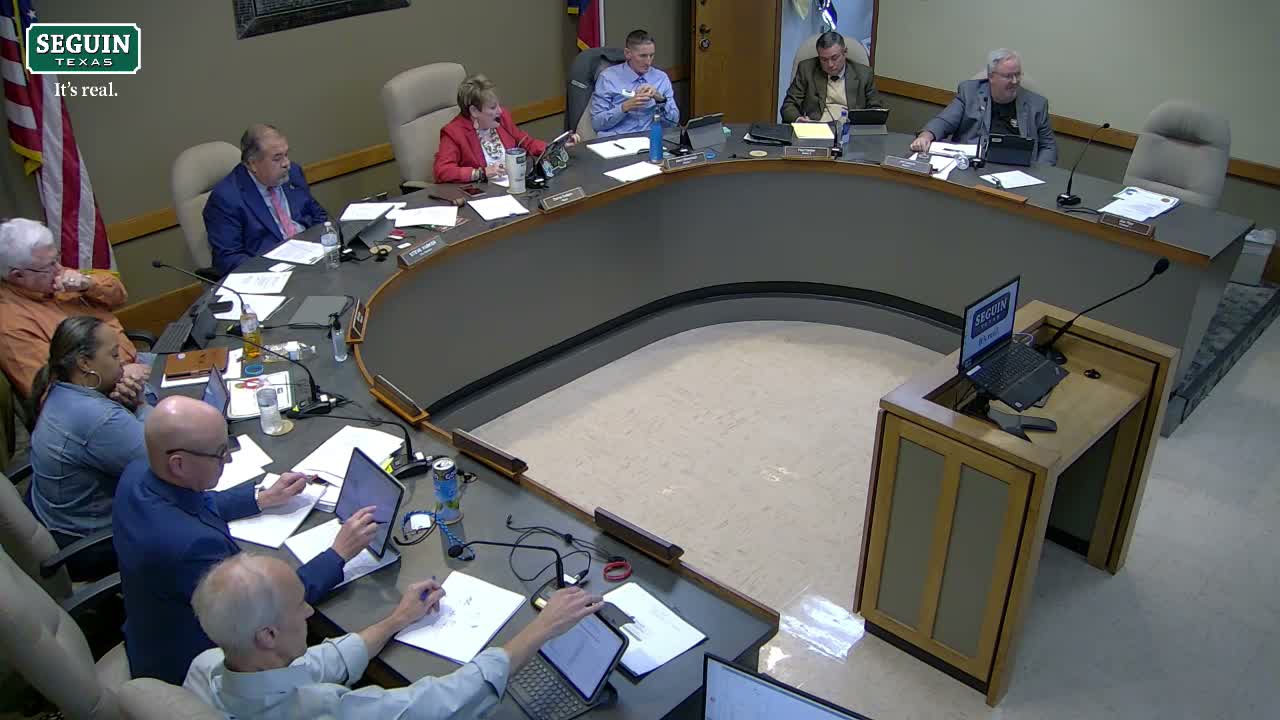
The Seguin City Council convened as the Seguin Public Finance Corporation to consider a term sheet for the Lily Springs Apartments, a proposed 282-unit workforce housing project to be developed by LightPath.
John Kirk, founder of LightPath, and Summer Greathouse (legal counsel) described the project as a three-story, Class A workforce housing development near Cordova Road and Highway 46. Under the proposed structure the public facility corporation (PFC) would own the project and lease it to a development partnership for 75 years; state law limits a property-tax exemption to 60 years under current statute as discussed in the presentation. Economic terms in the term sheet included a $500,000 upfront structuring payment (presenter said it would be routed to Navarro ISD under the proposed split), an annual administrative payment that escalates over time, and a rental payment equal to 25% of the property taxes that would have been paid on the project (with two-thirds of that rental payment intended for the school district and one-third for the city).
The public comment and council discussion that followed focused on three issues: (1) the length and fiscal effect of the tax abatement, (2) whether other out-of-jurisdiction housing finance corporations (HFCs/PFCs) could step in and remove potential tax revenue without local notice, and (3) local control over management and maintenance. Navarro Independent School District representatives (Mandy Eppley, Navarro ISD) said the district had discussed the proposal and would prefer a taxable property but acknowledged the revenue-sharing agreement would provide some funds; she also noted the school board was not uniformly supportive. Legal counsel warned that statutes and pending Attorney General guidance leave some uncertainty about the ability of outside HFCs to sponsor off-jurisdiction projects.
Council members were sharply divided. Some members argued the PFC approach was necessary to enable Class A workforce housing that otherwise would not finance, and they emphasized negotiated protections: audit rights, performance covenants, and revenue-sharing to soften school-district impacts. Others said they were unwilling to accept 60'plus years of effective tax exemption and that fear of an outside entity was not sufficient reason to approve the structure. After a recorded roll call, the motion to approve the PFC term sheet failed; the mayor noted the resolution failed and the council returned to routine business.
The failure means the city will not, at this meeting, enter the PFC arrangement described in the term sheet; the developer said extensions had been granted by capital partners but also that other sponsorship options exist outside the city, which was a key point of contention during debate.