Get Full Government Meeting Transcripts, Videos, & Alerts Forever!
Get email alerts on the Urban Planning topic
No spam. Unsubscribe anytime.
ULI Boston outlines one-day TAP process, costs and examples as Concord considers an application
Summary
ULI Boston told the Town of Concord Advisory Board that its Technical Assistance Panels (TAPs) typically run one day, produce a public presentation immediately and an in-depth written report in 8–10 weeks, and cost about $15,000–$20,000 for local events; larger five-day national panels cost roughly $125,000–$150,000.
The Town of Concord Advisory Board on Monday heard a presentation from ULI Boston on the organization’s Technical Assistance Panel (TAP) program and what the town should expect if it applies for one.
"ULI Boston TAPS program, we've had over 50 TAPS over the past 20 years," said Michelle Landers, identified in the meeting as executive director of ULI Boston. She told the board TAP engagements typically address downtown revitalization, neighborhood revitalization, redevelopment of key municipal assets, corridor planning and master planning support.
Landers described the typical TAP format as a one-day process that includes a pre-briefing with sponsors, a site tour, stakeholder interviews and a public presentation the same afternoon or evening. "Generally it's a one-day process," she said, adding that a professional writer synthesizes the panel’s findings and a full report is usually available about "8 to 10 weeks" after the presentation.
Costs and scope varied by scale: Landers said ULI Boston’s local one-day TAPs are generally about $15,000, two-day local panels about $20,000, while the national five-day advisory services panels (ASPs) typically cost in the $125,000–$150,000 range. She said MassDevelopment is often a major sponsor of TAPs and can provide panelists or additional assistance.
ULI panelists framed the TAP as a tool to help towns identify practical options and questions to guide later technical work. Larry Spain, introduced as a partner at Arrowstreet and chair of ULI’s Real Estate Advisory Council, and Sandy Silk of Jefferson Apartment Group said sponsors shape the stakeholder list for interviews and that panels aim to bring objective expertise rather than market the personal services of any panelist.
Board members asked whether the TAP could be run before environmental or market investigations. Landers said TAPs generally do not perform technical site investigations but can include experts (for example, environmental scientists or traffic engineers) who help clarify what tests or studies the town should commission next.
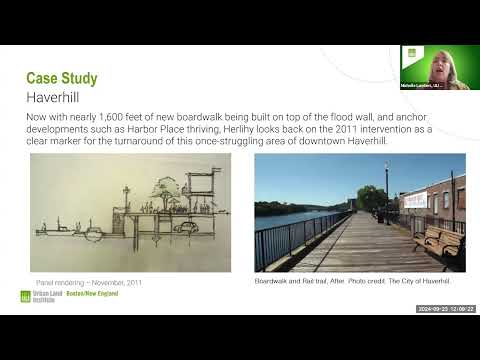
Several members asked for examples and precedent reports. Landers offered Haverhill and a Worcester courthouse redevelopment as case studies where TAP recommendations influenced local redevelopment and private investment. She also said ULI Boston can provide examples of both local TAPs and larger ASP reports for the advisory board to review before deciding whether to apply.
The presentation concluded with ULI staff describing next steps for an application: sponsor identification of stakeholders and priorities, coordination on panelist recruitment, and a minimum lead time of roughly eight weeks from application acceptance to a completed local TAP engagement.
The advisory board did not vote on a TAP application during the meeting; members asked staff to collect sample TAP reports, clarify whether state or local agencies should be cosponsors, and return with additional information on timelines and likely budgets.