Get Full Government Meeting Transcripts, Videos, & Alerts Forever!
Get email alerts on the Land Use Acquisition topic
No spam. Unsubscribe anytime.
Concord task force tables conditional recommendation to pursue acquisition of 2229 Main Street pending legal review
Summary
The 2229 Main Street Advisory Task Force presented a draft motion asking the Select Board to explore acquiring the federal Superfund‑site property, request negotiations with EPA and DOJ, and pursue parallel multi‑site planning, but members agreed to defer a final vote until they have the full report and legal chapter.
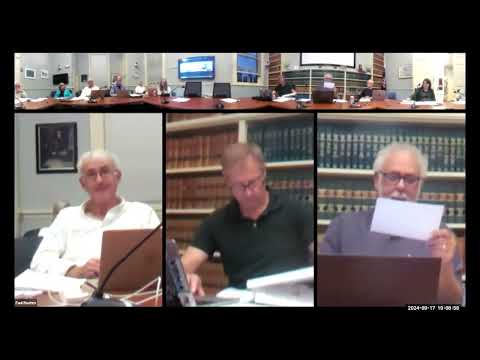
The 2229 Main Street Advisory Task Force on Sept. 17 presented a draft motion urging the Select Board to begin the process of potentially acquiring the 2229 Main Street property while remediation continues, but deferred a formal vote until committee members can review the report’s legal chapter and final drafts.
Chair Paul Bohm, reading the recommendation, said the task force’s proposal had three principal elements: “1) formally express to the EPA an interest in potentially acquiring the property; 2) direct town counsel to enter into negotiations with EPA and DOJ and other parties to determine whether terms and conditions regarding financial matters and liability protections favorable to the town can be achieved; and 3) in parallel to legal negotiations, include the site in a multi‑site planning process through which the specific uses and cost of development of the 2229 Main Street property can be determined.”
The most contested point among members was procedural: several task force members said they were not comfortable taking a binding vote before seeing the full draft report and, in particular, the legal chapter that will summarize liability options. One member summed up the concern by saying the group should avoid “the perception” that it finalized a recommendation before the full draft was available. Others pushed back that the recommendation reflects months of deliberation and earlier work and could be advanced conditionally.
After more than an hour of discussion about wording, negotiation partners (members asked whether lienholders and the Commonwealth should be named in addition to EPA and DOJ), and the timing of planning activities relative to negotiations, the group agreed to record the draft language in the minutes but table the formal approval until the committee meets again in roughly two weeks. Chair Bohm stated the tabling was to allow members to receive and review the outstanding legal analysis before finalizing the recommendation.
The debate included several technical and policy points that the task force asked to be clearer in the final report. Members requested a brief, plain‑English explanation of the risk methodology and recommended that the report explicitly address emerging contaminants such as PFAS and who would bear future responsibility if new federal or state standards were established. Paul Bohm noted a comment from environmental consultant Bruce Thompson—“he thought the site would not be ready to develop until 2029”—and asked that any externally sourced estimates be cited in the report.
The meeting also covered the report production schedule. The chair proposed bringing a fuller draft to members in the coming weeks and targeting production of a final, formatted report around Dec. 1, with a potential request to the Select Board for a 30‑day extension of the task force’s deadline. Members discussed the importance of timing for budgeting (noting legal fees might need to be included in the FY26 request) and agreed to keep the Select Board informed of progress.
Committee members reviewed substantive chapters in the draft report during the meeting. In the risk chapter they asked for a clearer explanation of what chemicals were tested and a map showing sampling locations; in the reuse chapter they debated whether to lead with municipal uses (town facilities, recreation, senior housing) or private uses (market housing), ultimately preferring to foreground municipal uses while noting multiple options. In chapters on ownership and institutional controls members emphasized distinguishing remediation operations and maintenance (pump‑and‑treat systems) from land‑use institutional controls and asked the legal chapter to specify responsibilities for each.
Public comment at the end of the meeting reinforced liability concerns. A resident who identified himself as a licensed insurance adviser urged town officials to “read very carefully and understand every word of the acquisition document and every word of the insurance document” to protect the town. Terry Ackerman, representing town leadership, told the task force that the Select Board would prefer a thorough, careful report and that a modest extension would be acceptable.
Next steps: the task force will circulate the outstanding legal chapter and revised drafts, review members’ edits, and return to the acquisition recommendation at the next meeting in two weeks. The draft motion language will be retained in the minutes for further refinement prior to any formal vote.