Get Full Government Meeting Transcripts, Videos, & Alerts Forever!
Get email alerts on the Junction Park Signage topic
No spam. Unsubscribe anytime.
Concord TAC and residents debate signage and safety fixes at Junction Park; no action taken
Summary
At a Sept. 12 Transportation Advisory Committee meeting, staff and residents debated replacing 'walk your bike' signs, MBTA crossing warnings, and short-term visual fixes at Junction Park. Elizabeth Filosine said MBTA cooperation will be required for rights-of-way changes; no formal change was adopted.
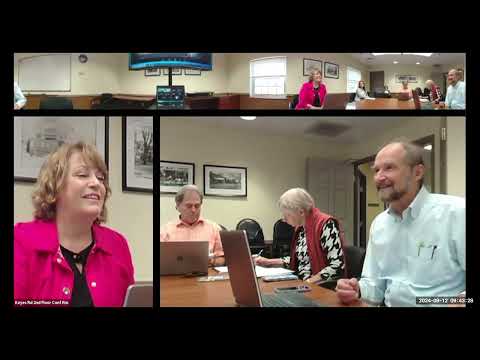
The Transportation Advisory Committee on Sept. 12 heard more than an hour of public comment and staff presentations about signage and safety at Junction Park in West Concord but took no formal action.
Town planner Elizabeth Filosine summarized prior work and the options under consideration, saying the advisory committee’s earlier short-term planter trial "failed, miserably," and that long-term changes such as a split path would require MBTA cooperation because they could affect the railroad right-of-way. Filosine also said the town completed a Safe Routes to School walk audit for Thoreau School and that a MassDOT "Signs and Lines" grant application is due Oct. 4; the grant covers design/specifications while the town would be responsible for construction funding.
Residents and rail-trail advocates urged revisions to signs that they say mislead users. Barbara Pike of the Friends of the Bruce Freeman Rail Trail said the advisory committee rescinded a prior "walk your bike" policy and asked that existing signs reading "walk your bike" be removed and replaced with language that reflects the corridor’s multiuse character, noting that "the Bruce Freeman Rail Trail is not a bike path."
Elizabeth described MBTA signs at the track crossing that read, as she relayed them, "look before crossing, walk bicycles across, do not ride over crossing," and committee members raised concerns that such messages can appear too late for a cyclist approaching at speed or in low light. Committee and public speakers discussed a range of options: replacing confusing wording with shorter messages such as "slow zone," changing graphics to be more visible to wheeled users, installing a paved or boardwalked short-term bypass around a bioretention area, or pursuing a longer-term separate path around Club Car Café and the loading platform if the MBTA agrees to participate.
Speakers stressed limits on TAC authority. The chair reminded the group that TAC is advisory and recommended the committee serve as a public forum to gather concerns and shape a recommendation to the town manager or select board. Elizabeth said she has Community Preservation Act (CPA) funds available to implement signage if a recommendation is approved and if jurisdictional issues can be resolved.
Public commenters who live and work near Junction Park described specific hazards and trade-offs. Cosette Dunn suggested a paved connector in an 8-foot area adjacent to pavers to give cyclists a clear visual route without removing existing landscaping; Mark Baldino, who represents a local gardening group, warned that creating a paved, visually continuous path through the hairpin turn could encourage higher speeds and increase collision risk on a narrow, bidirectional curve.
The committee agreed to circulate the slides and photos presented during the meeting, encourage members and the public to make field visits, and pursue MBTA contact through the select board liaison and other staff channels. Elizabeth said she is working on MBTA outreach and hoped to report back at the committee’s next meeting. No change to signage or infrastructure was adopted at the Sept. 12 meeting.