Get Full Government Meeting Transcripts, Videos, & Alerts Forever!
Get email alerts on the Religious Programs In Schools topic
No spam. Unsubscribe anytime.
Parents propose privately funded 'Bible Bus' program; board to consider policy steps
Summary
Speakers proposed a privatized Release Time Bible Education program (Bible Bus of the Ozarks) for elementary students, describing volunteer screening and off-site instruction; the board accepted information but took no formal action.
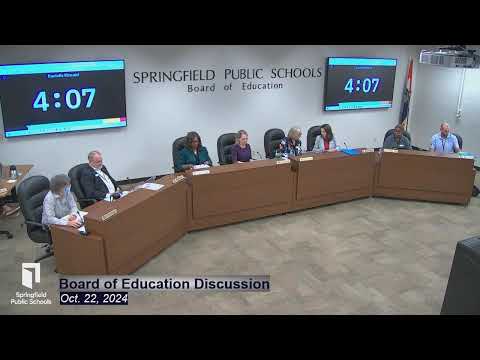
Two parents and advocates asked the Springfield R‑XII board on Oct. 22 to consider allowing a privately funded Release Time Bible Education program, which presenters called the Bible Bus of the Ozarks.
Barbara Cross described the program’s logistics, saying volunteers would collect third‑ through fifth‑grade students with written parental permission, walk them to a stationary mobile classroom on school grounds, and return them at the end of the session. She said curriculum is non‑denominational, volunteers undergo life‑scans and the program is insured and privately funded. "Release Time Bible Education is completely free to the schools," she said.
Karen Gonzales reiterated that the program is voluntary and off school grounds and asserted three requirements for release time: written parental permission, off‑campus instruction, and no state or federal funds used. She cited a study she said was conducted within the Oakland Unified School District showing improved literacy measures among participating students.
Speakers asked the board or a district liaison to meet with program representatives to craft a policy outlining how the program could be offered. The board did not take action at the meeting; staff accepted flyers and asked for follow-up contact by Nov. 22.
Next steps: program proponents asked the district liaison and principals to meet with organizers; the board indicated policy and legal review would be necessary before any program could be authorized to operate in district schools.