Get Full Government Meeting Transcripts, Videos, & Alerts Forever!
Get email alerts on the Electronic Voting topic
No spam. Unsubscribe anytime.
Concord committee schedules clicker hearing, urges town education before voting on reforms
Summary
Committee members and public commenters pushed for a dedicated hearing on electronic voting (clickers) and for public education on complex reforms; Carmen recommended consulting Wayland’s electronic-voting committee and David Allen urged neutral informational materials before polling residents.
Town of Concord committee members and public commenters agreed a dedicated public hearing is needed to explain the pros and cons of electronic voting and other substantial changes to town meeting procedures.
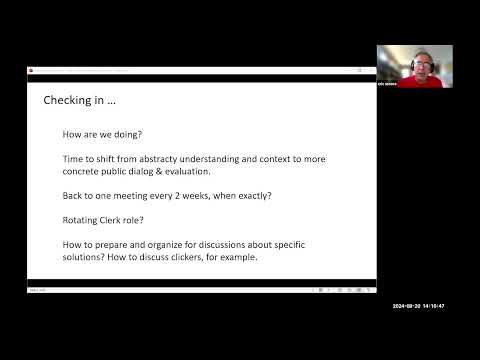
Eric Moore said he had promised proponents a chance to present: "I promised the clicker guys, that they would get a hearing on clickers because they're eager, to present on clickers to this group." Public commenter David Allen said local volunteers have already done extensive work on clicker systems and urged the committee to educate the town before seeking a townwide verdict: he said a number of residents "have done... a lot of work on clickers."
Carmen encouraged the committee to consult outside experience: she recommended connecting with "the electronic voting committee in Wayland that has done an awful lot of research on remote voting" so Concord can learn from their practical findings on security, vote integrity and the deliberative impacts of remote or electronic formats.
Why it matters: Electronic voting, remote town meeting pilots and referendum-style (Australian ballot) alternatives raise trade-offs on voter privacy, public deliberation and legal feasibility. Committee members emphasized that the community needs neutral information about those trade-offs before responding to referendum-style survey items.
Committee discussion also flagged operational and legal hurdles: members noted that remote voting may require state-level or home-rule petitions, and that some interventions (multiple locations, extra AV or policing) carry significant costs that must be weighed against potential participation gains.
Next steps: The committee plans to frame clickers and similar reforms in neutral pro/con language for hearings and for any referendum-style questions, while seeking outside guidance (Wayland) and creating educational material to accompany public polling.