Get Full Government Meeting Transcripts, Videos, & Alerts Forever!
Get email alerts on the Anderson Elementary topic
No spam. Unsubscribe anytime.
Anderson Elementary principal outlines shift to grade-level instruction, highlights SEL supports
Summary
Principal Anna Welsack told the board Anderson is prioritizing Tier 1, grade-level 'acceleration' instruction after reviewing data that showed flat reading growth; she described new collaborative planning (CATs), SEL 'Green Room' supports and pilots in literacy and said the work is urgent districtwide.
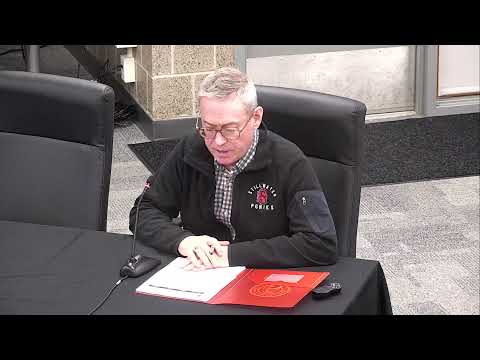
Anna Welsack, principal of Anderson Elementary School, told the Stillwater Area Public Schools board on Nov. 5 that the school is shifting its instructional approach to prioritize grade-level (Tier 1) instruction with targeted 'just-in-time' supports for students who need more help.
Welsack said the school's recent achievement data are "painful" and that reading performance has been ‘‘flatlining.’’ To address the gap, she described moving away from remediation models that keep students working on lower-grade content and toward an "acceleration" model that provides scaffolded supports while exposing all students to grade-level standards. "Tier 1 instruction for all is our primary focus," Welsack said.
Why it matters: Welsack said the move is intended to produce more consistent, systemwide growth rather than isolated gains for small groups. The principal emphasized urgency, calling acceleration "vital" and saying Anderson’s lessons could inform district practice.
Details and steps: Welsack described collaborative action teams (CATs) and frequent data cycles (SWIM) to identify students for Tier 2 and Tier 3 intervention, and cited PRESS as part of small-group literacy work. She outlined an observation and coaching routine (22 classroom visits completed) and a first-grade literacy pilot tied to LETRS training. She also said staff scheduled a Nov. 20 staff meeting focused on planning and that the building’s benchmark tracker is being shared with other schools.
Social-emotional supports: Welsack described a Green Room model coordinated by a paraprofessional (Evelyn) that offers scheduled, purposeful breaks and buddy-room check-ins and said the school is beginning SEL 'swim' meetings and using SABERS screening data to target supports.
Staffing and facilities: Welsack told the board small-school staffing can destabilize specialist positions (music, art) and said a planned larger new school will improve staffing stability and enable collaborative learning spaces.
Reaction and measurement: Board members asked how success will be measured; Welsack said the school will monitor MCA results, FastBridge benchmarks and weekly CAT data, with an emphasis on growth for students in the 40th–60th percentile range. She said the district must balance long-term measures with frequent progress monitoring.
Next steps: The principal said the school will continue the literacy pilot, expand CAT tools districtwide where effective, and report progress to the board. Welsack closed her presentation by reaffirming the school's focus: "When we know better we do better," and "all students means all."