Get Full Government Meeting Transcripts, Videos, & Alerts Forever!
Get email alerts on the Policy And Legislation topic
No spam. Unsubscribe anytime.
Dell Rapids council opposes Initiated Measure 28 and backs Dakota Mainstem regional water effort
Summary
On Aug. 7 the Dell Rapids council passed two resolutions: one opposing Initiated Measure 28 (a proposed restriction on state taxation of food that staff warned could reduce city revenue by about $300,000–$350,000) and another supporting the Dakota Mainstem Regional Water System; both measures passed by roll call.
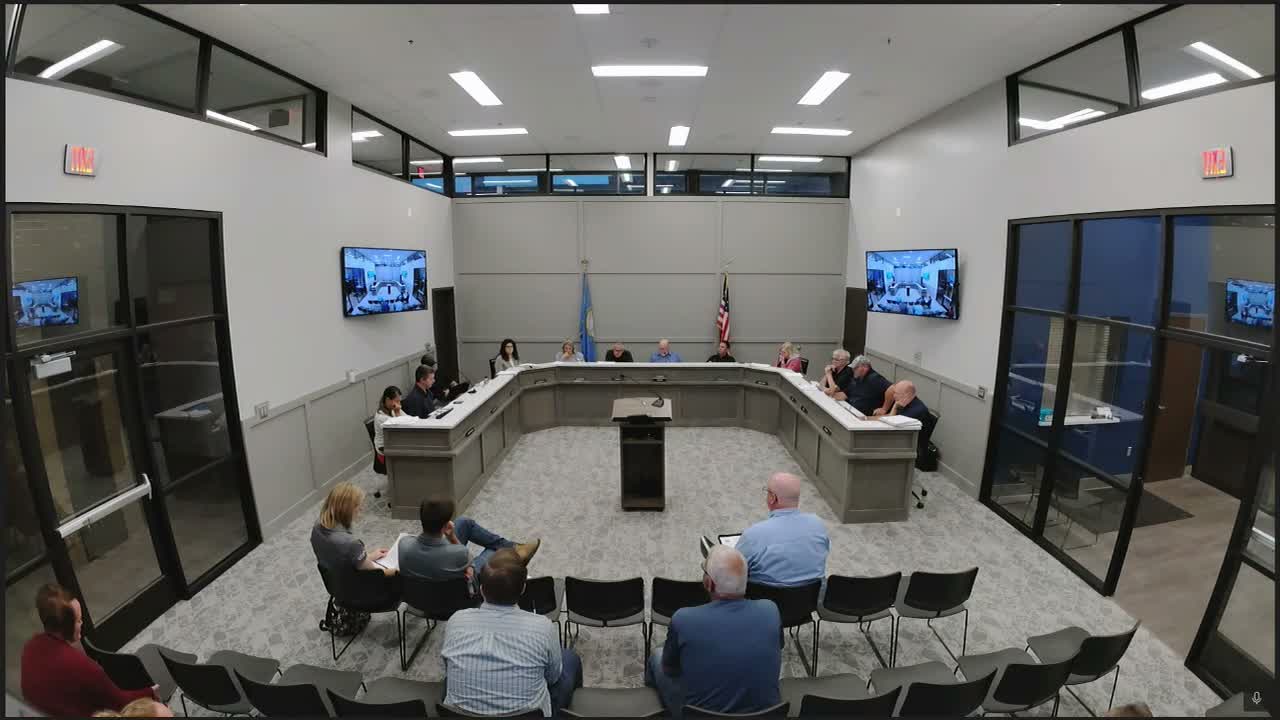
Dell Rapids city councilors on Aug. 7 adopted two resolutions addressing statewide and regional policy.
Opposition to Initiated Measure 28: Council voted unanimously to adopt Resolution 2024‑07 opposing Initiated Measure 28, a ballot initiative that staff and the Municipal League warned could be interpreted more broadly than a narrow grocery‑tax repeal. City staff said the initiative “could result in a loss of up to 300 to $350,000 in revenue to our general fund,” and explained that because the state collects certain taxes on the city’s behalf, the measure’s language could remove the state’s mechanism to collect those taxes and reduce city receipts. The motion to adopt Resolution 2024‑07 was made by Chad and seconded by Denise; the finance officer called a unanimous roll call in favor.
Support for Dakota Mainstem Regional Water System: The council also approved Resolution 2024‑08, which expresses support for the Dakota Mainstem Regional Water System, a long‑range concept to pull water from the Missouri River and distribute it across participating jurisdictions. Staff described the initiative as a multi‑entity planning effort involving 29 participants and said a likely early dues structure would be about $3,000 plus a population fraction (roughly $3,900 for Dell Rapids) to fund lobbying and administrative efforts; the council approved the resolution by roll call.
Both resolutions passed with recorded roll‑call yes votes from council members present. City staff noted that legal questions about Initiative 28’s scope would likely be resolved after any successful passage, possibly in court, and that any fiscal impacts to the city would be realized on a timeline after state implementation.