Get Full Government Meeting Transcripts, Videos, & Alerts Forever!
Get email alerts on the Public Safety topic
No spam. Unsubscribe anytime.
Police chief warns multi-year radio outages are a public-safety risk; city awaits state study
Summary
Police Chief Jeff Jensen told the council that Mobridge and nearby communities have experienced persistent gaps in the state public-safety radio system, calling it an officer-safety issue and outlining options ranging from LTE fallback devices to building a local tower that could cost hundreds of thousands of dollars.
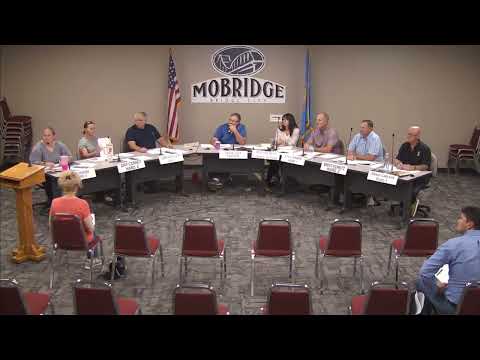
Police Chief Jeff Jensen told the Mobridge City Council on Sept. 11 that the city has experienced multi-year degradation of the state public-safety radio system that leaves officers unable to reliably reach dispatch in parts of the community.
"This is an officer safety issue. This is a public safety issue," Jensen said, describing failed work orders with the state's Bureau of Information Technology and equipment the vendor (Motorola) no longer supports. He said Glenham service is "horrible" and Mobridge is "spotty," and that his department has resorted to analog radios and cell phones when digital radios fail.
Why it matters: unreliable radio connectivity can delay emergency response and force officers to use less secure or less reliable communications. Jensen told the council the city and county may be responsible for some or all of the costs of any permanent fix.
What officials said: Jensen laid out interim and longer-term options the city is weighing. Short-term fallback equipment that routes calls over cellular networks (LTE) is already being tried; Jensen said one LTE unit would cost roughly $29 per month per device for two years. Longer-term options include local infrastructure: Jensen estimated that establishing a staffed tower site (land, building and equipment) could range from roughly $500,000 to over $1 million, depending on land acquisition and site construction.
Jensen also described equipment obsolescence: he said repeaters in one tower were Motorola models the vendor no longer supports, and that a statewide P25 upgrade completed last year had not resolved local dropouts.
Next steps and city role: Jensen said he had submitted a detailed list of dates, times and radio IDs to the state's BIT to help their study and asked the council to be prepared for potential local costs if the state's recommendation relies on city-level investments. He offered to bring a state radio representative to a future meeting to explain recommended technology and costs.
Council response: Council members asked where coverage gaps exist and whether costs should be shared with the county; Jensen said the issue appears to be shared geographically and suggested a mix of city, county and state responsibility. No formal motion or funding decision was taken at the meeting; staff and the state's BIT will continue technical review.