Get Full Government Meeting Transcripts, Videos, & Alerts Forever!
Get email alerts on the Flood Resiliency topic
No spam. Unsubscribe anytime.
Canton commissioners approve HDR study to update flood‑resiliency options, contingent on federal funding
Summary
The Canton City Commission voted to accept HDR’s $70,000 proposal — to be executed with JSA and CCOG support — to update prior flood modeling and produce project-level solutions and benefit‑cost analyses needed for FEMA and other grant applications, contingent on federal funding.
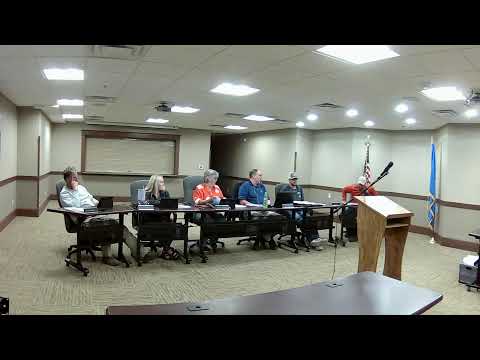
The Canton City Commission voted to accept a proposal from HDR, working with JSA, to update the city’s flood‑resiliency modeling and identify implementable projects, the commission said during its meeting. The motion to accept HDR’s proposal was made contingent on federal funding and carried on a roll call vote.
TJ Yarden, HDR’s project manager, told the commission the firm will use the 2011 hydraulic model as a backbone rather than creating a new model from scratch and will verify earlier findings before developing solutions and cost estimates for each affected basin. "We’re utilizing that model as the backbone and utilizing that for looking at solutions on top of what’s already been looked at," Yarden said.
The study’s stated deliverables include flood‑event analyses (5‑, 10‑, 50‑ and 100‑year design events), proposed mitigation options in each problem area, and benefit‑cost analyses suitable for FEMA and other grant applications. HDR representatives described funding pathways — FEMA mitigation grants (commonly requiring a 25% local/state match), BRIC/EDA opportunities for larger projects, and low‑interest SRF or 1% loan programs — and said they will assist with grant‑application materials so the city and its CCOG representative can submit competitive requests.
Commissioners pressed HDR on what the $70,000 study will produce that differs from a 2011 report the city already has; one commissioner said, "I don’t want this study sitting on the shelf," urging clear follow‑through. HDR responded that the 2011 model will be updated and that the new analysis will include project‑level cost estimates and cost‑benefit outputs required for grant applications. Yarden characterized the June event as an extraordinarily large rainfall, saying a one‑day storm in parts of the area exceeded typical design charts and that FEMA evaluates proposed projects by comparing project cost to avoided damages.
HDR and commissioners discussed watershed boundaries and upstream contributors (including railroad crossings and neighboring township culverts), and HDR said the study will examine upstream basins that drain to Cedar Street and identify any plugged or misdirected flows during the analysis. Staff and consultants also described how certain applications — for example, EDA or BRIC — can require additional reporting or tailoring beyond the basic mitigation study and may require extra engineering effort.
The commission instructed staff to accept the HDR proposal contingent on federal funding and to move forward with scope refinement; CCOG was identified as the local partner to assist with grant applications. The acceptance authorizes HDR to start the study phase once federal funding availability is confirmed.