Get Full Government Meeting Transcripts, Videos, & Alerts Forever!
Get email alerts on the Fountain Wind topic
No spam. Unsubscribe anytime.
Shasta County touts digital campaign and legal challenge to block Fountain Wind project
Summary
Shasta County's public information officer reported the county's 'Stop the Fountain Wind' campaign has drawn 32,000 website views, near 2 million ad impressions and 605 formal docket submissions to the California Energy Commission as the county continues legal challenges to AB 205 and urges fellow counties to oppose the project.
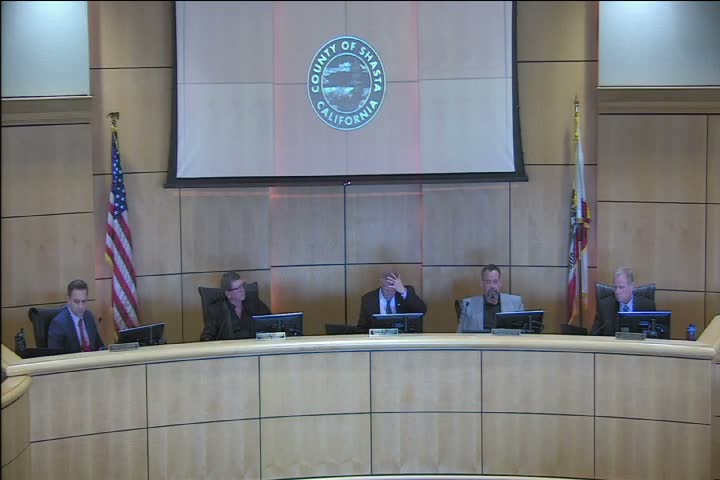
Shasta County officials told the Board of Supervisors on March 11 that a county-run outreach and legal strategy is under way to oppose the Fountain Wind energy project and the state law (AB 205) that accelerated the CEC's authority over the application. "This came after local legislators had unanimously denied the project twice already," Public Information Officer David Mung said, describing the county's campaign and its aims.
The county's campaign has relied heavily on digital advertising and direct mail, Mung said. "To date ... we've received 32,000 views of this website," he told the board, and the campaign's digital ads have recorded just under 2,000,000 impressions with a total reach of about 1,400,000 users. Mung said the ads produced an 8.24 percent click rate and a cost per click of approximately $0.31, both metrics he described as above average for similar political and social-issue advertising.
Mung said the campaign has mailed materials to just over 53,000 county residents and sent multiple email blasts to comparable lists. "Total docket log submissions that we've seen since the beginning of the campaign is 605," he said, referring to formal public comments submitted to the California Energy Commission's online docket. He reported the county has spent just under $58,000 of the $100,000 allocated for the campaign and plans to reserve remaining funds for messaging tied to wildfire risk and updated graphics.
The presentation framed the campaign as protecting locally significant lands and public safety. "Key messaging for the campaign included that the threatened wind project would result in destruction of tribally significant lands in our county," Mung said during the slideshow, adding that the county argues the CEC's approval would be an overreach of state authority that would supersede local decisions.
During public comment many residents praised the board's opposition. "Thank you for what you've done to protect our sovereignty by fighting the windmills," one speaker said. Other commenters urged the board to expand legal efforts and to continue outreach to neighboring counties.
Board members asked how the county targeted mail and digital outreach; Mung said a contracted marketing firm supplied targeted address and email lists and that outreach had been heavier in eastern parts of Shasta County. He also said local tribal governments and the Redding Rancheria and Pit River Tribe had submitted docket opposition letters but did not contribute county campaign funds. County counsel, when asked about lawsuit details, told the board that litigation specifics were not an open-session matter.
The board previously voted to launch the campaign and has taken legal steps challenging aspects of AB 205. The presentation noted Fountain Wind was the first applicant to file under that law and could set a regulatory precedent depending on the CEC decision. The county did not report any formal new board action on the project during the meeting beyond the briefing and continuing outreach plans.
Next steps announced by the PIO included leaner, fire‑risk messaging using remaining campaign funds and renewed outreach when a CEC decision appears imminent. The board did not vote on a new action item at the close of the presentation.