Get Full Government Meeting Transcripts, Videos, & Alerts Forever!
Get email alerts on the Land Use topic
No spam. Unsubscribe anytime.
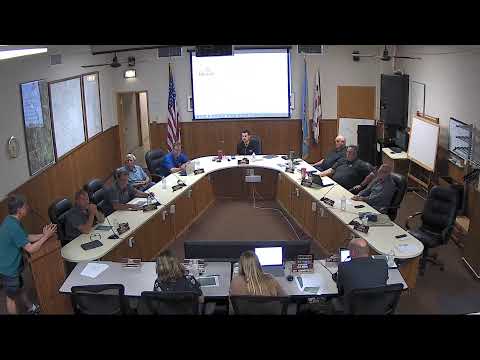
Mitchell council directs staff to plat three Lake Mitchell parcels amid debate over selling parkland
Summary
Councilors agreed to move forward with platting Lots 58B, 68A and 108A at Lake Mitchell — creating legal descriptions that could allow future sale, lease or easements — after residents warned that selling lakefront land could harm trails and watershed. No formal sale decision was made; petitions and Planning Commission review would precede any vote.
Mitchell City Council members directed staff to proceed with platting three Lake Mitchell parcels — Lots 58B, 68A and 108A — to create legal descriptions that would allow future action, including possible sale, easements or long-term leases. The decision came after more than an hour of staff presentations, council discussion and public comment, and was taken as staff direction rather than a formal roll-call vote.
The council discussion centered on two procedural facts: a citizen must carry any petition to place parkland undesignation on a ballot, and the platting process is necessary to produce usable legal descriptions. Councilors and staff repeatedly said a petition would have to collect roughly 500 signatures, and the Davidson County Auditor told staff that final ballot language would be due by August 6 if a parcel were to appear on an upcoming ballot. Election costs were estimated at about $8,000–$10,000 per election.
Unidentified Speaker 1, a staff presenter, described disposal options if parcels are undesignated: “You can do it by auction, you can do it by sealed bid or you can list them with a broker,” and noted the Council would choose the method if it later elected to sell. Staff and multiple council members emphasized that a petition to undesignate parkland is only the first step; any sale or transfer would be a later Council decision following Planning Commission review.
The discussion also addressed specific site issues. Lot 68A was described as a narrow, largely unbuildable strip adjacent to an existing residence where an owner-built pool and other improvements encroach onto city-owned parkland. Unidentified Speaker 3 reported the owner said a city employee told them to build about ten years ago; staff said it had no record of a permit and that, if the public rejects undesignation, the likely recourse would be to require removal of encroachments and, if necessary, pursue court action. “The only recourse is probably going to be to require the removal of any of the encroachments,” Unidentified Speaker 1 said during the discussion.
Council members and residents were sharply divided on the broader policy question. Proponents framed platting as a prudent first step that would allow the city to resolve unclear boundaries, support utility or project work and, if the public opts in, generate tax revenue and funds for lake projects. Opponents warned that selling lakefront land is a one-time revenue source that could permanently reduce public access and harm trails and watershed. Steven Larson, a resident, told the council: “To sell this land now is to exclude it from all of these future generations,” urging preservation rather than piecemeal sales. Joan Lubin and Tim Lubin echoed concerns about protecting the lake’s natural character and trails.
Several councilors proposed alternatives to outright sale, such as reserving easements to maintain trail access, pursuing long-term leases (a 99-year lease was floated as an example) or structuring shared-use agreements that would keep ownership with the city while allowing private amenities. Staff cautioned that state statutes limit what can be done with parkland and any lease or use agreement would need careful legal structuring.
With few objections voiced when a council member asked whether to proceed, the meeting’s working direction was recorded as moving forward with platting Lots 58B, 68A and 108A so the Planning Commission can review them and the Council can take subsequent action. The council also reminded the public that citizen petitions and public comment will be part of any future undesignation and sale process.
Next steps: staff will process plats for the three parcels and submit proposals to the Planning Commission. If petitioners seek to place an undesignation question on a ballot, they must collect the required signatures and meet county deadlines; any sale, lease or easement would require separate Council action after Planning Commission review.