Get Full Government Meeting Transcripts, Videos, & Alerts Forever!
Get email alerts on the City Budget Sales Tax topic
No spam. Unsubscribe anytime.
City administrator warns Mitchell could lose millions if November tax measure broadens sales‑tax base
Summary
City Administrator Stephanie Ehlwein told the board a November ballot measure to shrink sales‑tax collections could cost Mitchell roughly $1.4 million if limited to groceries and as much as $6.9–$7.0 million if a broad definition of 'for human consumption' applies, potentially cutting community services funding and prompting legal challenges.
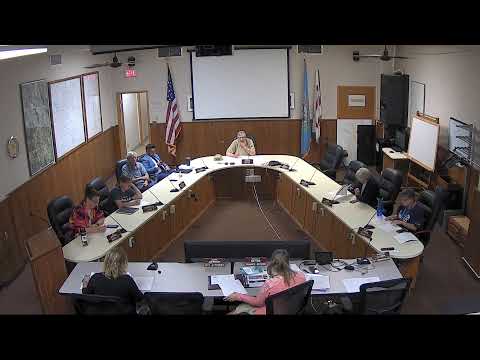
City Administrator Stephanie Ehlwein told the Mitchell Community Services Board that a proposed November ballot measure to reduce sales‑tax collections could reduce the city’s general‑fund revenue by an estimated $1.4 million if it applies only to groceries, and by as much as $6.9–$7.0 million if the measure’s broad phrasing on items “for human consumption” extends to other goods.
“Sales tax is really how the city funds our operations of everything we do,” Ehlwein said, explaining that roughly $300,000 in general‑fund support currently underpins community services including Palace Transit, nutrition programs and the senior center. She said the Legislative Research Council told a study panel the broad definition could affect gasoline, tobacco and beauty products and that applying that estimate to Mitchell yields the larger revenue loss.
Ehlwein flagged a potential legal complication: state law limits what local governments can tax to items on which the state collects sales tax. She said that could produce a legal challenge about whether cities are prohibited from collecting tax when the state removes a category. “There’ll probably be a legal challenge that comes up with that,” she said, adding that municipalities and the South Dakota Municipal League are tracking the issue.
Ehlwein also noted outreach steps: the state’s Plan on Aging and a statewide transit coordination plan have included sessions and surveys; she said the state will publish a Plan on Aging draft for public comment in October and that a survey will be released in September. The Mitchell Area Development Corporation is preparing local promotional and informational materials and staff encouraged board members to direct residents to public forums and the city for more information.
The presentation was requested by Council Member Dozier during the citizen‑input portion; board members discussed the potential implications for municipal services and for property taxes if offsets are required. No formal board action on the ballot measure was taken at the meeting.
The city will continue public education and monitor state guidance; staff offered to answer questions in person and provided contact information for further follow‑up.