Get Full Government Meeting Transcripts, Videos, & Alerts Forever!
Get email alerts on the Public Health topic
No spam. Unsubscribe anytime.
Mono County health officer reports cluster of three hantavirus deaths in Mammoth Lakes; expands outreach and screening
Summary
Mono County Health Officer Dr. Tom Boo told the Board that three residents of Mammoth Lakes recently died of hantavirus; county public health is increasing outreach, training hospital labs on a five-point screening test and advising people to ventilate and use N95 respirators for high-risk indoor cleanups.
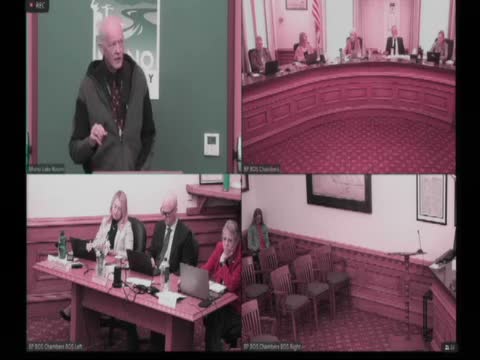
Dr. Tom Boo, Mono County's public health officer, told the Board of Supervisors the county has identified a cluster of three confirmed hantavirus pulmonary syndrome deaths in Mammoth Lakes with illness onsets in February. "We recently lost three Mammoth Lakes community members to hantavirus," Boo said, noting that hantaviruses in North America are carried by deer mice and that infections are most often linked to inhalation of aerosolized mouse waste indoors.
Boo said the county has not had a case since 2019 until this cluster and that Mono County's historical case count is notable: "Mono County's 207 cases over 32 years constitute about one third of state cases despite having only 0.03 percent of the population of California," he said. Boo cautioned that early illness can resemble common winter respiratory infections and that specialized laboratory testing is limited.
To improve early detection and treatment, Mammoth Hospital is beginning to implement a five-point hematology screening protocol that can help flag patients likely to be entering the life-threatening pulmonary phase. Boo said laboratory personnel from an Indian Health Service hospital in Arizona have offered training for Mammoth and neighboring laboratories to standardize the screen. "Mammoth Hospital plans to combine the use of this screening with other measures to increase the chances of identifying people with life-threatening hantavirus in time to get them to a facility with life-saving ECMO-supported therapy," he said.
Public health is also ramping up outreach. Boo described an expanded education strategy using press releases, social media, radio spots, paid newspaper ads and multilingual materials in collaboration with the town of Mammoth Lakes and state health communicators. He urged residents to ventilate and disinfect enclosed spaces and to avoid sweeping or vacuuming contaminated areas. For heavy indoor contamination he recommended N95 respirators: "I would probably reserve use of an N95 respirator mask...it doesn't hurt to use an N95 mask," Boo said, and staff noted free N95s are available at county offices pending confirmation.
Board members pressed for clarity on likely exposure routes. Boo said investigations had not identified a single, classic exposure and that even routine indoor cleaning where droppings are present can pose risk. The board thanked public health staff for coordinating external training and expanding outreach. Boo said he remains concerned about potential additional cases and encouraged residents to report evidence of mice in homes and workplaces.
The county will continue to update clinicians, provide laboratory training, and run a targeted public information campaign; there was no formal board action on this informational item.