Get Full Government Meeting Transcripts, Videos, & Alerts Forever!
Get email alerts on the Disaster Recovery topic
No spam. Unsubscribe anytime.
Merced County details Planada $20 million flood recovery program and timelines for home repairs
Summary
County staff updated the Board of Supervisors on the Planada recovery program funded by a $20 million state allocation: roughly $9.2 million has been invested so far across direct assistance, business loss, food and housing repairs; staff reported 185 homes under active repair and requested community engagement on how to spend remaining funds.
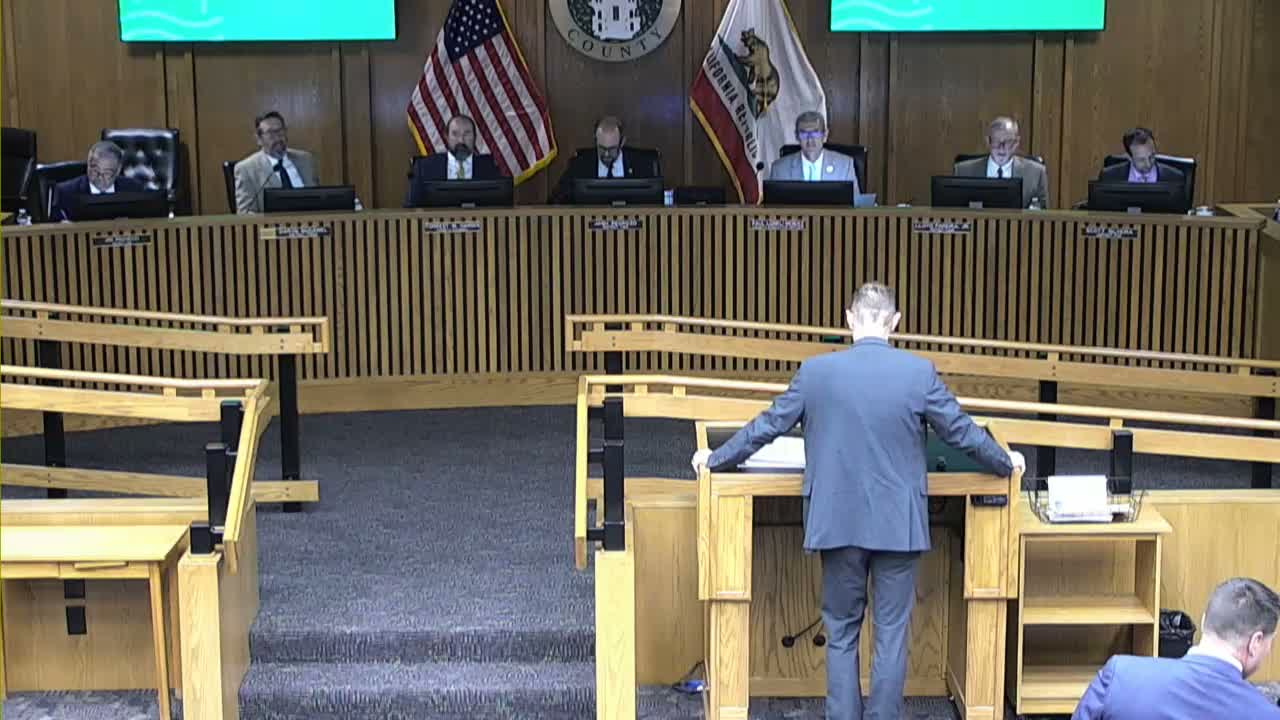
Merced County staff told the Board of Supervisors on April 8 that work to distribute a $20 million state allocation for Planada flood recovery is underway and that staff expect more than $10 million in additional investments in the coming months.
Assistant County Executive Officer Mark Hendrickson said the county was named fiscal agent for the state funds and described a program built with resident input through six community workshops. The county received 1,009 applications across program streams, including 843 direct-assistance requests, 287 lost-wage claims, 47 business-loss requests and 350 housing-repair applications, Hendrickson said.
Michelle Rowe, deputy director of the Human Services Agency, said the direct-assistance window closed after an appeals process and that $2,841,000 in direct payments were issued out of $4,000,000 originally allotted for that component; payments covered housing expenses, personal-property loss, vehicle repairs and food assistance. She said appeal awards added roughly $55,377 to payments in personal-property, food-loss and vehicle-repair categories and that reimbursements were reduced for duplicated private or nonprofit aid.
Eric Serrato, director of Workforce Investment, described how the county handled business-loss and lost-wage applications. The department verified more than $2,000,000 in business losses and distributed about $855,000 in awards; independent contractors accounted for 38% of business-loss awards with an average award of about $27,584, he said. Serrato said the county removed an initial $300-per-week cap on lost-wage awards after seeing that the original cap limited relief for many workers.
Mark Mims, director of Community and Economic Development, outlined the home-repair component: $8,000,000 was allocated; $4,600,000 has been expended or committed; 350 housing applications were filed, 119 were withdrawn or denied, 48 projects have been completed and signed off, 185 are active and five are pending inspection. He said FEMA appraisal rules can trigger rebuilds when repair costs exceed 50% of appraised value; that requirement has led to about six rebuild determinations so far.
Nathan Bray (Public Works) described the infrastructure component, which included procurement and installation of an emergency generator for the Planada Community Services District, Miles Creek clearing (about 7.42 miles cleared so far) and a Miles Creek watershed study. Bray said the county coordinated with the state on the watershed study and identified $1.75–$2.0 million to reallocate into local infrastructure needs such as repaving, drains and sidewalk projects.
Hendrickson summarized the accounting and next steps: roughly $9.225 million has been invested to date, including $2.8 million in direct financial assistance; $687,000 for food-loss assistance; $385,000 for vehicle replacement; and $1.77 million for personal-property and rental assistance. Staff told the board they anticipate another $10.7 million in investments and have begun planning community engagement on reprogramming priorities. The board noted an expenditure deadline tied to the funding and staff said they have contacted state OES about a possible extension.
Residents who addressed the board during public comment asked for clearer budget breakdowns and an independent oversight mechanism. Alicia Rodriguez, a Planada volunteer, said published charts were difficult for residents to parse and requested that reimbursements to homeowners be listed separately from agency and contractor expenses. County staff responded that some line items reflect allocations and commitments rather than cash disbursements and that documentation and in-person appointments are available for applicants with questions.
The board unanimously approved the related information items and directed staff to continue community outreach on outstanding priorities and reprogramming options.