Get Full Government Meeting Transcripts, Videos, & Alerts Forever!
Get email alerts on the Heritage Funding topic
No spam. Unsubscribe anytime.
Brookfield Town debates whether Heritage Commission events should use town funds or a separate nonprofit
Summary
At a Brookfield Town session, participants questioned whether Heritage Commission events (barbecue, ice cream social) should be paid from town accounts or run by an independent 501(c)(3); speakers cited past $500 annual contributions, donated goods, and unclear fund accounting.
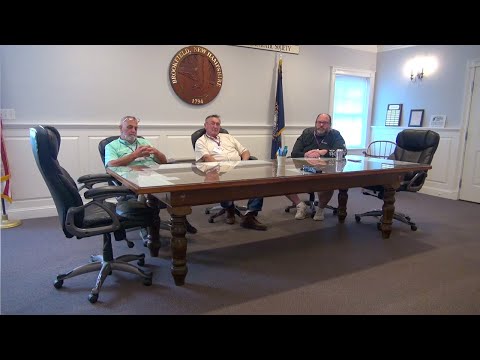
Speaker 1, an unidentified meeting participant, opened a recess and explained the group was waiting for a consultant to sketch expansion options for a town building. Much of the discussion then focused on the Heritage Commission’s bank account and whether funds in it were public money or private donations.
The most contested point was who controls and may spend money held in the commission’s account. Speaker 4 argued the account contains public funds and donations and should be treated as public money open to all town residents; Speaker 3 said donations are separated from public appropriations but acknowledged confusion about the account’s composition. “How much of the money in the fund is public trust and how much is donated?” Speaker 4 asked, highlighting residents’ uncertainty about sources.
Speakers recalled the town used to appropriate about $500 annually to the Heritage Commission but that those payments stopped roughly three years ago. Speaker 4 estimated the town’s total donations over time at about $5,000. Event costs were discussed as context: Speaker 2 estimated an ice cream social could cost about $2,300, and Speaker 1 said a past barbecue grossed about $1,600 with what one participant described as roughly $500–$600 in profit, much of it supported by donated food.
Options discussed included keeping the Heritage Commission as a town-managed entity with town oversight or converting its functions into a separate nonprofit with its own board and bank account. Speaker 1 said forming a separate 501(c)(3) “is cleaner” but cautioned it would be a lot of work and require volunteers or pro bono professional help (legal, accounting, treasurer duties) to manage tax filings and governance. Speaker 3 noted that in the past the commission has sought taxpayer funding through warrant articles and then spent those funds on programs.
No formal decision was recorded in the transcript. Participants suggested practical compromises: the town can donate to an independent nonprofit, the nonprofit would keep separate records and an account, and the town could continue to allow the commission to use town facilities under a user-fee arrangement. The discussion closed with participants agreeing there was work to clarify fund accounting and recommending clearer recordkeeping and governance if a separate entity is created.
The matter remains a discussion point for future meetings; no formal motion or vote was recorded in the provided transcript.