Get Full Government Meeting Transcripts, Videos, & Alerts Forever!
Get email alerts on the Local Government topic
No spam. Unsubscribe anytime.
Town council contenders debate taxes, development, municipal court and third‑shift policing
Summary
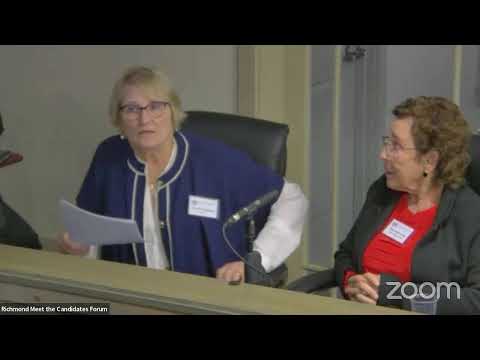
Five Richmond town council candidates discussed strategies to manage high property taxes, barriers to business development, municipal services needs and whether to maintain the police department’s overnight third shift at a League‑moderated forum. Each urged voters to consider governance and council civility when choosing councilors.
Five candidates vying for five seats on the Richmond Town Council outlined competing priorities for managing taxes, encouraging economic development and maintaining municipal services in a forum moderated by the League of Women Voters.
The candidates agreed on the challenge: the school budget accounts for the majority of local taxes, leaving limited municipal revenue. Mark Reynolds said the town must focus on quality‑of‑life services and continue projects such as a previously approved $2,000,000 road‑repaving bond; Dan Madnick proposed instituting a compost program to reduce transfer‑station costs and create revenue; Samantha Wilcox and others urged adding staff capacity for grant writing and community outreach.
Why it matters: Richmond voters face tradeoffs between sustaining strong schools (which support property values) and growing the town’s municipal revenue base. Candidates emphasized aligning development with the town’s rural character while seeking new sources of revenue.
On economic development and infrastructure, candidates cited limits such as water and sewage capacity and a small inventory of commercially zoned land. Several speakers recommended targeted approaches: recruiting businesses that fit the comprehensive plan, revitalizing downtown buildings and pursuing adaptive reuse of mills to add housing or mixed‑use space without large school‑cost impacts.
Affordable housing discussion included proposals to promote accessory‑dwelling units, reconsider developer waiver fees for inclusionary zoning and explore mixed‑use adaptive‑reuse projects. Candidates distinguished low‑to‑moderate income housing from deeply subsidized programs and urged clear communication about eligibility and tradeoffs.
The forum also covered municipal court and public safety. Multiple speakers supported implementing the municipal court approved by referendum to keep violations local and help enforce conditions; candidates described it as revenue‑neutral and useful to compel compliance. On policing, candidates strongly opposed eliminating the police department’s overnight third shift, citing slower state‑police response times and recent incidents where local officers were first responders; one speaker recounted a medical emergency where a local officer arrived within 15 minutes and likely saved a life.
Candidates repeatedly returned to governance themes: restoring civility, improving council‑staff collaboration and prioritizing listening and long‑term planning as key competencies for council members.
The forum ended with closing statements and a League announcement that a voter guide will be distributed before the election; moderators reminded residents of early‑voting and mail‑in windows and Election Day on Nov. 5.
Next steps: Voters will select town council members on Nov. 5 and are encouraged to consult the League’s voter guide.