Get Full Government Meeting Transcripts, Videos, & Alerts Forever!
Get email alerts on the Land Use Statute Change topic
No spam. Unsubscribe anytime.
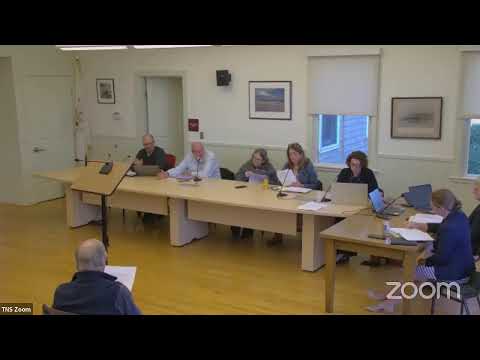
New Shoreham work session examines state land-use changes; special-use rules, appeals and reviews spark concern
Summary
At an Oct. 8 work session, town land-use attorney Karen Browning briefed New Shoreham officials on recent Rhode Island statute changes that shift zoning relief into planning hearings, expand administrative approvals, and let more appeals go straight to court; attendees flagged risks around special-use permits and high numbers of nonconforming lots.
NEW SHOREHAM — At a town work session on Oct. 8, Karen Browning, the town’s land-use attorney, told council and planning board members that recent changes to Rhode Island land-use law will alter how the town handles zoning relief, appeals, technical review and notices.
“Zoning is enacted by the town council,” Browning said, then explained the statute now allows planning boards to grant zoning relief as part of unified development review when a planning application also requires zoning relief. Under that approach, she said, planning must approve or deny the zoning relief first and make it conditional on final plan approval so approvals occur in the correct order.
The change, Browning said, expands duties for the planning board and reduces the role of the zoning board in some cases. She also cautioned that more town decisions may be appealed directly to court rather than first to a local zoning board, noting the legislature established a new land-use court with priority dockets for land-use appeals.
“That means you may see more things getting appealed that all of a sudden pop up in court,” Browning said, adding that the change reflects a state effort to streamline permitting and spur housing development.
The meeting focused on three procedural shifts attendees said will affect local decisions: the unified development review (UDR) process; a technical review committee (TRC) created by recent ordinance amendment; and changes to development plan review (DPR) and administrative approvals.
Browning described the TRC as an advisory panel “to conduct technical reviews of applications and provide recommendations” to boards or the administrative officer. The TRC, she said, is established by ordinance to consist of at least three members appointed by the planning board, but the planning board must still adopt rules and regulations to specify which applications the TRC will review.
“I would say the rules and regs are still being drafted,” Browning said. “Which ones are gonna go to the TRC is still being worked out.”
Questions from attendees illustrated practical concerns. One participant recounted a recent permit where a house measured “within an inch” of a 32-foot height limit and asked whether the TRC would handle such close calls; Browning said that could be directed to the TRC depending on the rules the planning board adopts, but staff review also remains an option.
Special-use permits drew particular alarm. An attendee identified only in the transcript as S7 said the statutory language that could make certain special-use permits “permitted by right” if local criteria are not already set “scares the pants off of me.” Browning and staff said the town prioritized drafting local criteria — with consultant Weston & Sampson — and that those criteria already exist in the materials provided to members.
Staff also warned that many local lots do not meet current standards. Jen, the town’s administrative officer and zoning officer, summarized initial calculations and the impact on lot coverage and setbacks; at one point a presenter said, “75% of the lots in the residential a zone are nonconforming,” a figure participants said they would analyze in more detail.
Other procedural items Browning highlighted included: • Administrative approvals — many minor land-development and final-plan applications will go to the administrative officer; the officer must still honor conditions and findings set earlier in the approval flow. • Variance standards — the statutory standard for dimensional variances has changed and members were urged to tie each finding to evidence on the record. • Board composition and voting — the planning board minimum size is now five members (plus alternates); alternates vote only when members are absent and the number of voting members matters for valid approvals. • Notices — notice requirements broadened to allow posting on local websites and local-circulation papers; certified mail was replaced with first-class mail.
Browning recommended that board members bring the ordinance criteria to hearings so they can cite each required element in written decisions, and she emphasized that if members rely on personal knowledge they must state the factual basis and the conclusions drawn from it in the record.
The town’s planning staff said it will present data on nonconforming lots at the planning board’s November or December meeting so members can consider whether ordinance amendments are necessary. Several participants asked for a follow-up workshop in six to nine months to assess how the changes are working locally.
The work session was informational; no formal motions or votes were recorded on the transcript. Browning said she will attend future hearings to advise boards as the new procedures are applied.