Get Full Government Meeting Transcripts, Videos, & Alerts Forever!
Get email alerts on the Uniformed Services Tax Subtraction topic
No spam. Unsubscribe anytime.
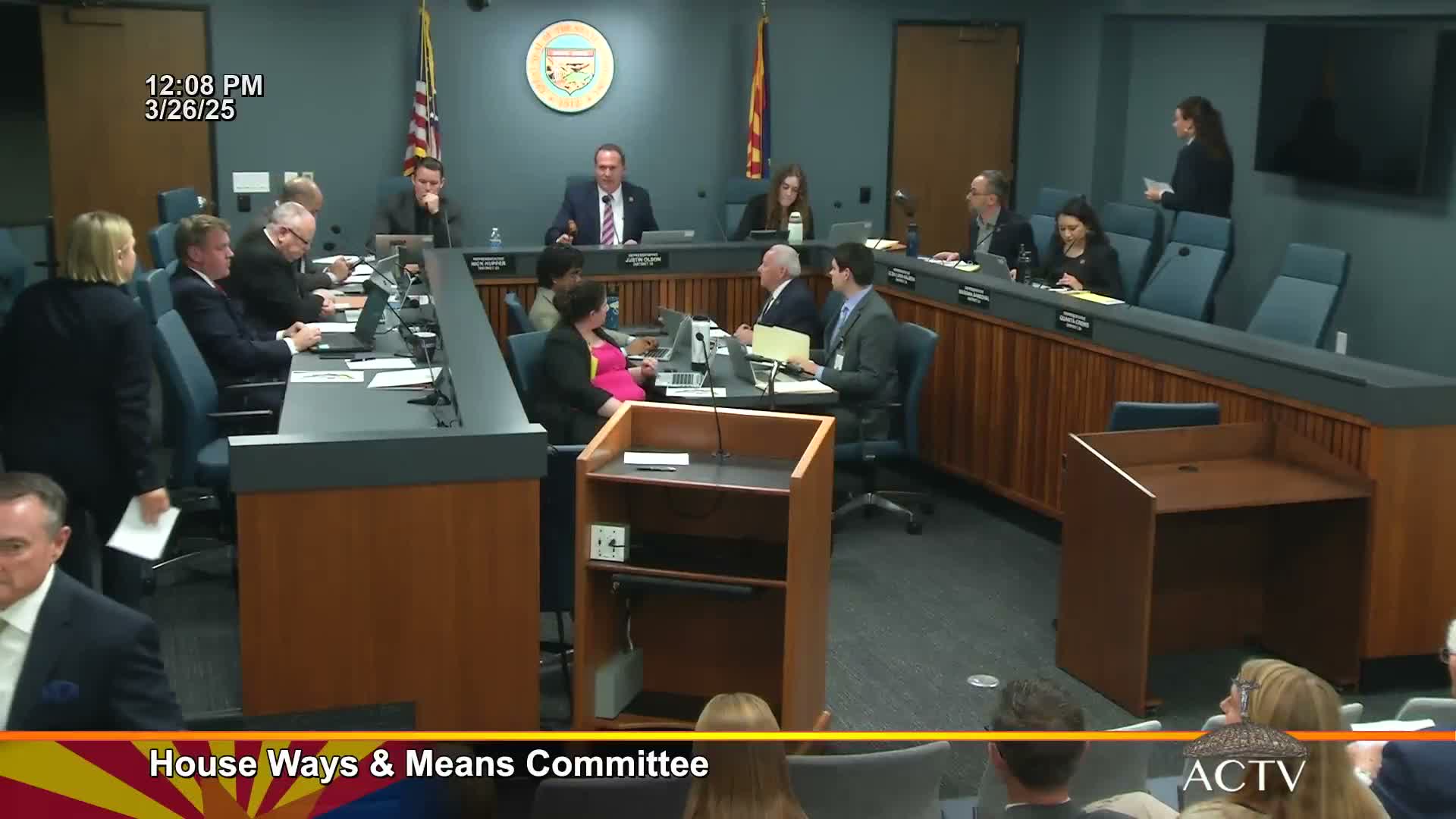
Committee approves SB1155 to extend tax subtraction to uniformed services
Summary
The committee advanced SB1155 to replace the term 'armed forces' with 'uniformed services' in an income-tax subtraction, aiming to include U.S. Public Health Service officers; several USPHS officers testified in support and the bill received bipartisan backing in committee.
The House Ways and Means Committee returned SB1155 with a due-pass recommendation after testimony highlighting an administrative omission in the existing income-tax subtraction for service members.
Research staff explained the bill replaces the phrase "armed forces" with "uniformed services," a change intended to include uniformed personnel such as U.S. Public Health Service officers and, where applicable, NOAA officers. Testimony from active-duty USPHS officers and family members described deployments and public-health service in Arizona communities.
Darren Venters and Captain Robert Boyle described USPHS assignments providing care across remote and tribal communities and said the change would equalize treatment for uniformed-service officers who serve in similar conditions to military personnel. "This bill will correct that inequity and create parity amongst all of the uniform services," Venters said.
The committee discussed scope and confirmed the change primarily affects USPHS officers in Arizona (about 360 officers were cited); members voted in favor and the sponsor and committee thanked witnesses for their service.
SB1155 was moved and returned with a due-pass recommendation; members said they expected the change to correct a statutory oversight and to treat uniformed service members uniformly for the state subtraction.