Get Full Government Meeting Transcripts, Videos, & Alerts Forever!
Get email alerts on the Immigration topic
No spam. Unsubscribe anytime.
Committee advances bill requiring cooperation with federal immigration detainers; community groups oppose
Summary
SB 11‑64, dubbed the Arizona ICE Act, was returned with a due‑pass recommendation after testimony from the state president and sheriffs arguing cooperation with ICE detainers is necessary for public safety; civil‑liberties and immigrant‑rights organizations warned it would erode trust and risk wrongful detentions.
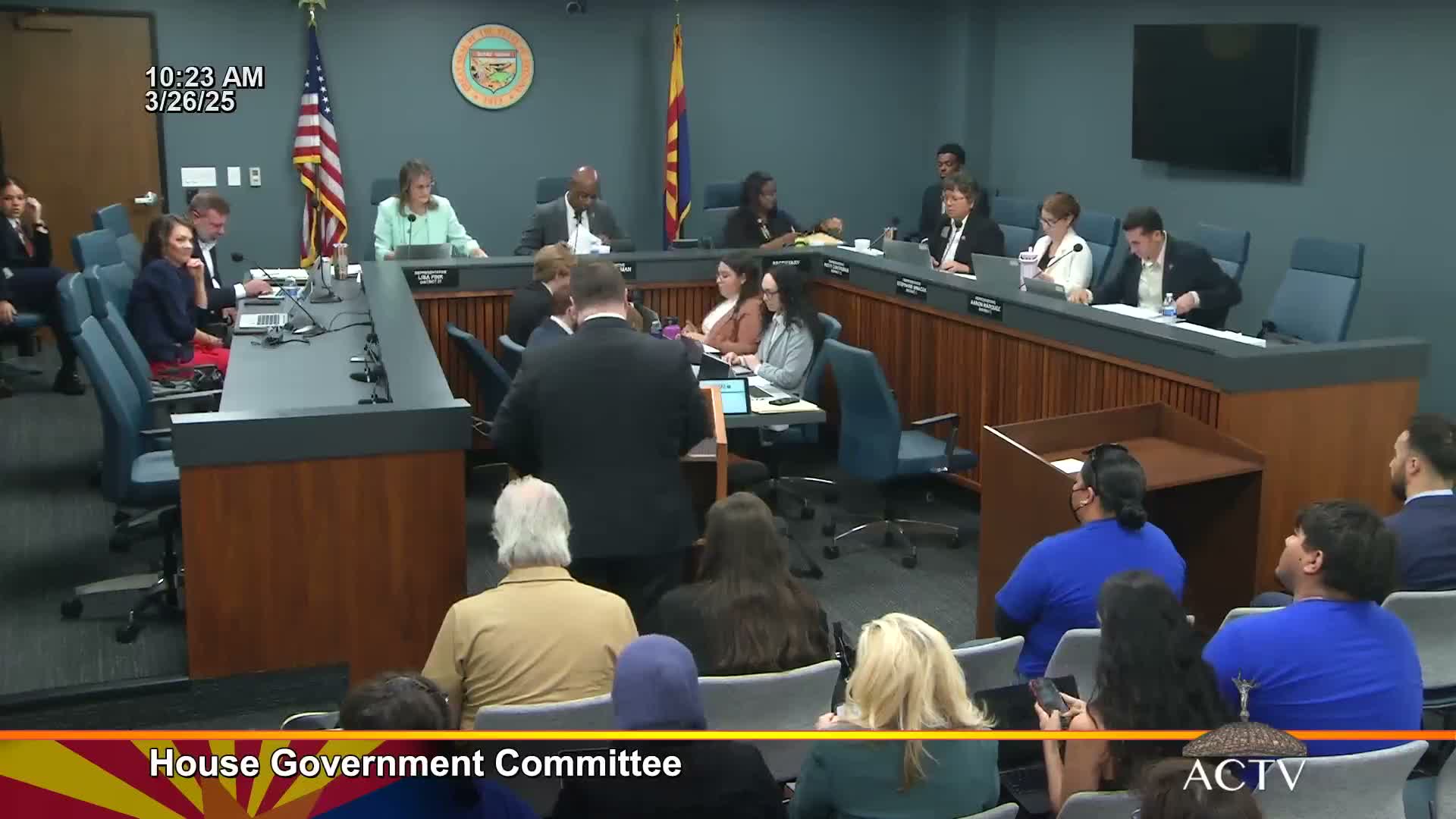
Senate Bill 11‑64 (the "Arizona ICE Act") moved forward from the House Committee on Government after a lengthy and often emotional hearing that included local law‑enforcement leaders, immigrant‑rights groups and community advocates.
Sponsor President Peterson said the bill prohibits local ordinances that obstruct federal immigration enforcement, requires honoring ICE detainers for up to 48 hours in custody to permit federal pickup and authorizes the attorney general to investigate compliance. Sheriff David Rhodes, president of the Arizona Sheriffs Association, told the committee the proposal preserves public‑safety cooperation without ordering local officers to perform immigration sweeps.
Opponents — including the ACLU, Living United for Change in Arizona (LUCHA) and other community groups — warned the bill would undermine community policing, deter crime reporting by immigrant residents and risk civil‑rights violations. The ACLU's representative said the language could force agencies to abandon policies designed to preserve trust with immigrant communities.
Committee testimony also covered fiscal and staffing questions; sheriffs said ICE generally reimburses local agencies for continued custody, but members raised concerns about the possible fiscal impact and due‑process risks. After debate the committee recorded a recommendation to return SB 11‑64 with a due‑pass (vote recorded on the record). The bill will proceed to the floor where members may introduce technical and substantive amendments.