Get Full Government Meeting Transcripts, Videos, & Alerts Forever!
Get email alerts on the Housing Starter Homes topic
No spam. Unsubscribe anytime.
House committee advances starter‑homes preemption bill after hours of testimony and amendments
Summary
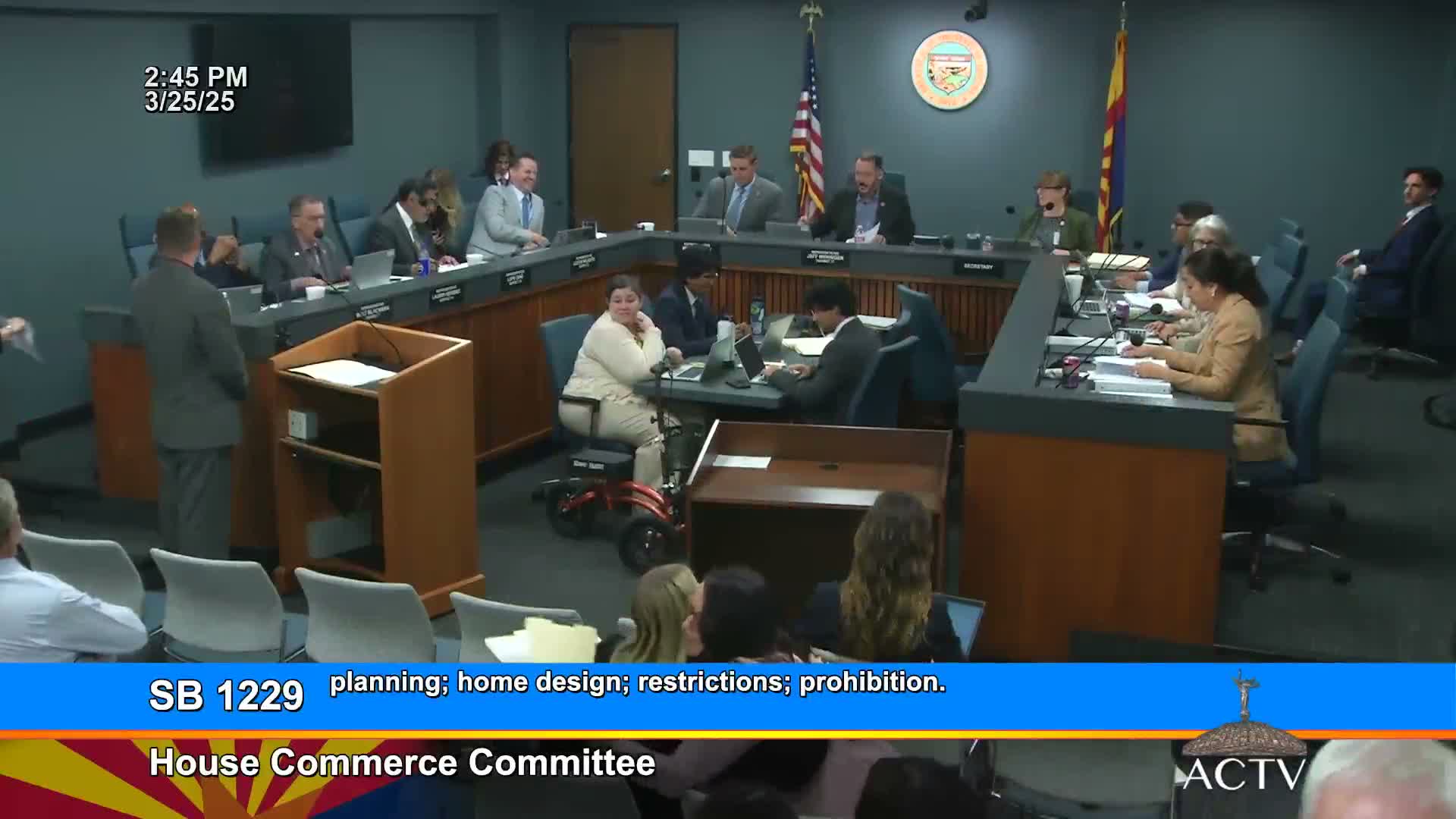
SB 12 29, the Arizona Starter Home Act, passed the Commerce Committee as amended after lengthy debate. Sponsors said the bill liberalizes local design and lot controls to enable smaller, lower‑cost starter homes; cities, mayors and neighborhood groups warned about preemption, infrastructure strain and lack of affordability guarantees.
The Commerce Committee advanced SB 12 29, commonly described as the Arizona Starter Home Act, after an extended hearing that drew dozens of proponents and opponents and several floor‑level amendments.
Sponsor testimony said the bill reduces municipal prohibitions that have made modest single‑family homes difficult to build and would legally allow many smaller homes on small lots. Supporters, including builders and housing advocates, argued the reforms could produce product at price points they estimated in the $250,000–$260,000 range in some markets and that local regulations and design mandates contribute materially to housing cost growth.
Opponents including the League of Arizona Cities and dozens of mayors and neighborhood leaders said the bill is a "one‑size‑fits‑all" preemption that would undermine voter‑approved general plans, hamper infrastructure and fiscal planning (water, roads, police and fire), and offer no guarantee that newly built units will be sold to first‑time buyers rather than investors or converted into short‑term rentals. Multiple speakers asked for deed‑restriction language, affordability metrics tied to area median income (AMI), and sunset or pilot provisions to evaluate outcomes.
Committee members debated several amendments, including a striker and a four‑page Aguilar amendment that clarified shared amenities and allowed certain water‑retention measures. After amendment adoption the sponsor said stakeholder meetings would continue and the bill was moved with a due‑pass recommendation and additional floor amendment work planned.
Why it matters: The bill seeks to change local zoning limits statewide to allow smaller single‑family homes and reduce some municipal design controls; it raises questions about local control, infrastructure capacity, investor conversion risk, and whether supply alone will produce affordability.