Get Full Government Meeting Transcripts, Videos, & Alerts Forever!
Get email alerts on the Utility Finance topic
No spam. Unsubscribe anytime.
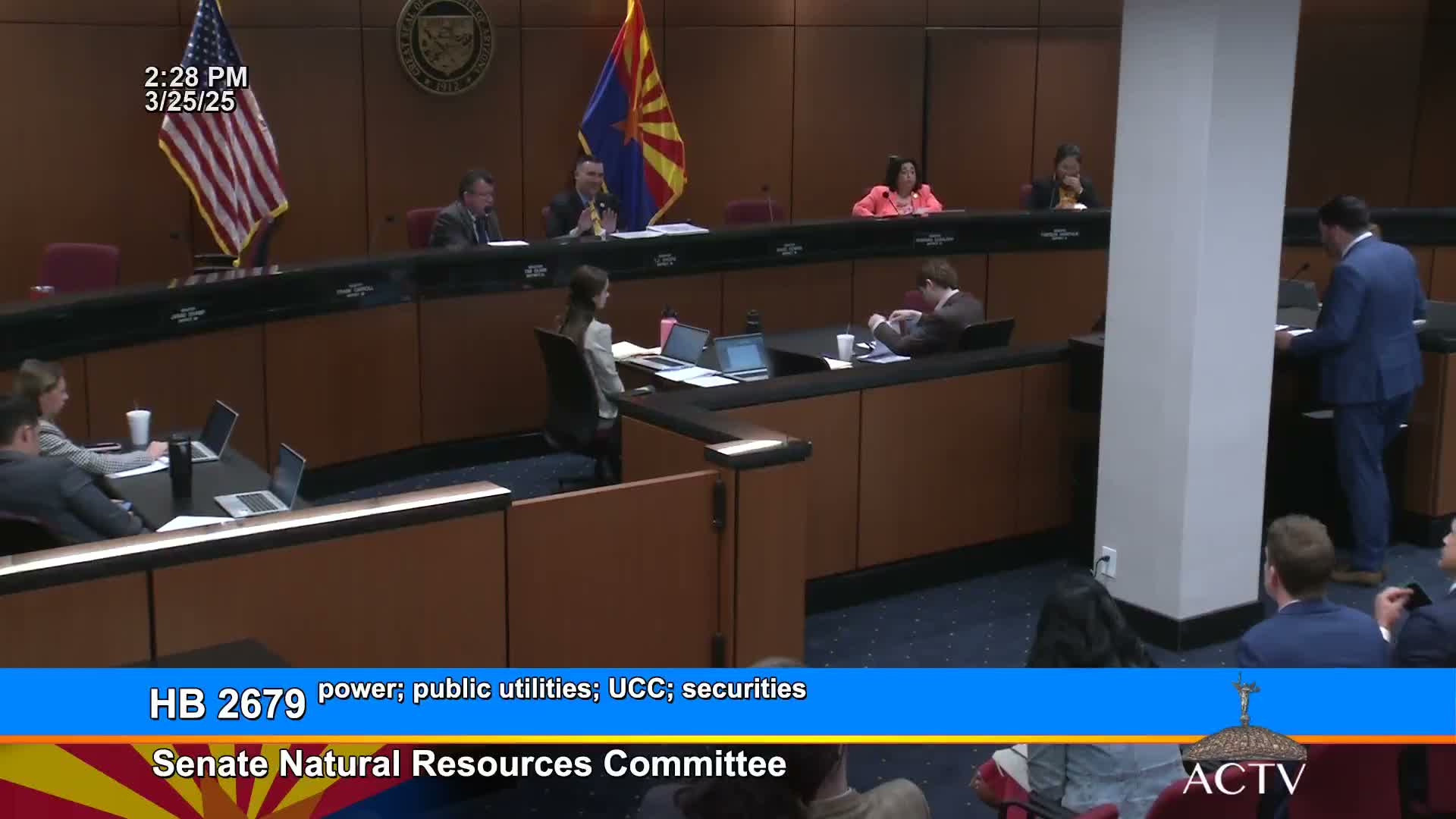
Debate over securitization bill spotlights tradeoff between customer savings and consumer protections
Summary
Lawmakers heard hours of testimony on HB 2,679, which would authorize securitization transactions for public power and investor‑owned utilities; utilities and labor said it can lower costs and smooth rate impacts, while environmental and consumer groups warned the measure is broad and could shift storm, fuel and other costs to ratepayers without sufficient caps or sunset provisions.
The Senate Natural Resources Committee spent substantial time on House Bill 2,679, a measure that would authorize public power entities and public service corporations to pursue securitization transactions—issuing transition bonds to refinance certain utility costs and repay them over time with lower interest rates.
Supporters said securitization is a proven financing tool that can lower the cost of recovering unrecovered net book value when aging plants are retired and can protect customers from sudden rate shocks tied to fuel price spikes or disasters. “Securitization is simply a financial tool used to refinance utility assets...that saves customers money,” Michael Vargas of Arizona Public Service told the committee, describing securitization as a refinancing mechanism used in 33 states. Jeff Allman, APS counsel, presented a numerical example tied to the 4 Corners power plant and said that by refinancing unrecovered net book value with lower‑cost bonds customers can see material savings.
Proponents included business groups, labor unions and public power entities. Testimony from trade and business organizations said securitization can keep energy affordable for businesses and households; union representatives argued the tool can avoid sudden rate‑driven job and project disruptions.
Opponents raised guardrail concerns. Karen Potter of the Southwest Energy Efficiency Project said the bill “is dangerously broad, allowing utilities to turn nearly any cost into long‑term debt with minimal oversight,” warning that the amendment’s treatment of fuel‑cost volatility and a non‑bypassable surcharge could expose ratepayers to lasting charges without caps or sunsets. Environmental witnesses and consumer advocates worried the bill’s definitions and scope could allow securitization of storm costs, fuel spikes or other expenses that should be subject to full rate‑case scrutiny.
Committee questions focused on which costs are eligible, the Arizona Corporation Commission’s role, whether securitization would accelerate or slow review timelines compared with rate cases, and how savings to customers would be demonstrated and tracked. APS witnesses and others emphasized the Commission’s authority to review each transaction, and that the bill requires demonstrations of customer savings before a financing order could be approved.
Procedure: Multiple supporters moved that HB 2,679 receive a due pass recommendation. The committee record in this transcript includes the motion and extensive testimony; the transcript segments provided do not record a roll‑call vote on the bill outcome within the excerpted hearing text.
What happens next: If advanced by the committee, securitization proposals would still require a litigated review and approval by the Arizona Corporation Commission (for regulated utilities) or the relevant governing board (for public power entities), and each securitization application would have to show customer savings and be adjudicated under the processes described in the bill.