Get Full Government Meeting Transcripts, Videos, & Alerts Forever!
Get email alerts on the Juvenile Legal Representation topic
No spam. Unsubscribe anytime.
Senate committee backs $200,000 program to improve child-and-family representation; parents warn DDD gaps also threaten services
Summary
House Bill 2604 would establish a child-and-family representation program at the Administrative Office of the Courts with $200,000 and 1 FTE to coordinate attorney appointment and training; advocates and a parent testified in favor while linking the discussion to urgent DDD gap‑funding and provider shortages.
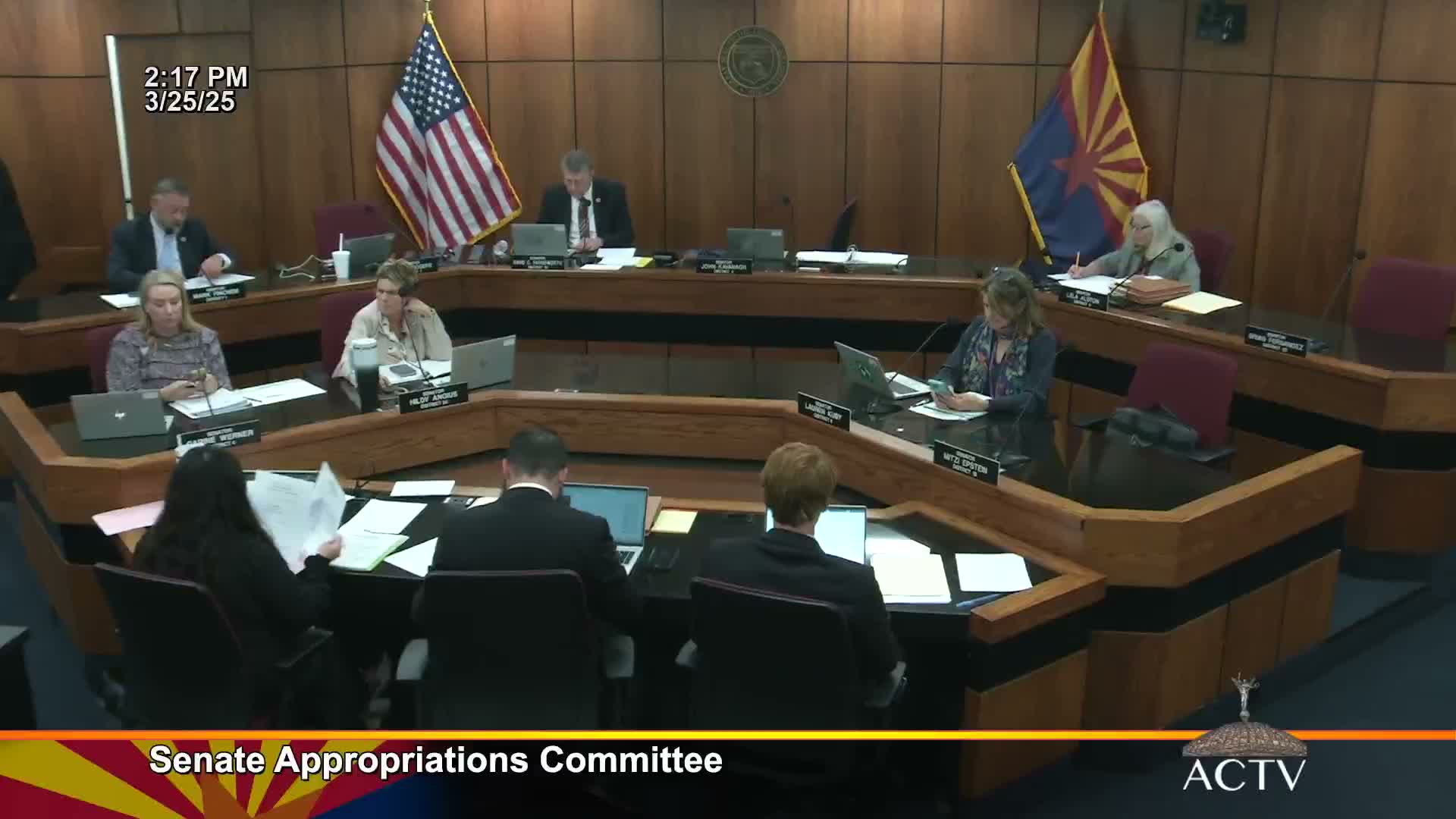
The Senate Appropriations Committee on March 21 gave House Bill 2604 a due-pass recommendation. The bill establishes a child and family representation program in the Administrative Office of the Courts and appropriates $200,000 and 1 FTE in FY2026 to improve uniform legal representation for children, parents and guardians in juvenile court proceedings.
Representative Nguyen, the sponsor (identified in committee remarks), said the program focuses on training and coordination so appointed attorneys have experience with dependency cases. Rob Dahlager of the Center for the Rights of Abused Children said the FTE will help coordinate attorney appointment efforts and training; "Arizona law requires" appointment of counsel for children in dependency cases, he added, but representation quality can vary.
Parent and testifier Brandy Coone described the real-world stakes for families with children who rely on state supports. Coone said provider shortages tied to uncertainty about Developmental Disabilities Division (DDD) gap funding are already causing staff turnover and program instability: "If gap funding was given today, it would still take multiple weeks for those dollars to hit DDD… Families like mine are already beginning to feel the consequences." She urged lawmakers to pursue both the representation program and prompt funding to avoid service interruptions.
Committee discussion clarified that the program includes training, an FTE managed by the Arizona Supreme Court to administer the program, and reporting requirements. The committee adopted a motion to give the bill a due-pass recommendation (recorded vote: 6 ayes, 0 nays, 4 not voting). The sponsor and advocates stressed the measure is aimed at improving lawyer competence and coordination in dependency cases.
Next steps: HB2604 will proceed with a due-pass recommendation and may be subject to floor consideration or further committee work.