Get Full Government Meeting Transcripts, Videos, & Alerts Forever!
Get email alerts on the Inclusionary Zoning topic
No spam. Unsubscribe anytime.
Planning board sends inclusionary-zoning amendment to Town Council
Summary
The North Smithfield Planning Board voted to forward a favorable recommendation to the Town Council on a draft inclusionary-zoning ordinance that would require affordable units in new developments; board members discussed the state 10% threshold and the need to amend related town ordinances.
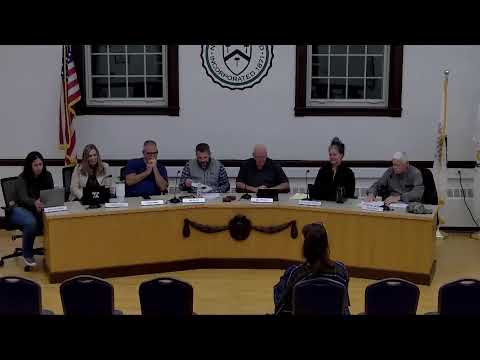
The North Smithfield Planning Board voted to send a favorable recommendation to the Town Council on a draft inclusionary-zoning amendment, the board chair announced after a roll-call vote.
The board’s motion, made at the meeting and seconded, asked the council to consider the planning office’s findings and the draft ordinance that would require a share of affordable units in qualifying developments. The planning office told the board the draft removes off-site compliance options so that required affordable units would be located within each development. “Because otherwise it wouldn't qualify as inclusionary,” an attendee said during the discussion.
The planner and solicitor cautioned the board that state law and municipal ordinances interact in ways the board must consider. The solicitor noted that a separate provision in the town’s court-of-ordinances (cited in the draft) currently calls for 20% in developments over six units, meaning the council may need to amend multiple town codes in tandem to avoid conflicts.
Board members also discussed Rhode Island’s 10% affordable-housing threshold, which affects whether a municipality is subject to comprehensive-permit applications. A planning-office explanation said the 10% figure is fixed for each 10-year census period (the denominator is set at the decennial count), so growth during the decade does not automatically change a town’s percentage until the next census recalculation.
The planning office said inclusionary requirements tend to produce more multifamily condominium or rental projects rather than single-family affordable units, and that federal grant programs have typically supported senior and disabled housing. A member asked whether large projects already approved — the planner cited Rankin's Path as an example — would be grandfathered; the planner said permitted or vested projects would not be remade by the ordinance.
The board’s motion passed on the roll call called at the meeting. The planning board recorded affirmative votes from the members present and the chair confirmed the recommendation would be forwarded to the Town Council for consideration.
The recommendation is advisory; the Town Council will consider the ordinance and any related amendments to other town codes at a future meeting.