Get Full Government Meeting Transcripts, Videos, & Alerts Forever!
Get email alerts on the Coastal Permitting topic
No spam. Unsubscribe anytime.
Law fellow lays out CRMC permitting paths and makes case for hybrid approaches on Block Island
Summary
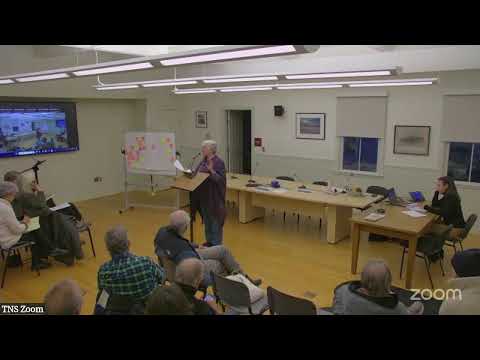
Roger Williams law fellow Samuel Filiaghi told the Block Island Coastal Resilience Committee that CRMC treats green, gray and hybrid shoreline projects differently, described the higher bar for gray infrastructure in Type I waters, and highlighted Nantucket case lessons for municipal involvement.
Samuel Filiaghi, a law fellow working with Roger Williams University and Rhode Island Sea Grant, told the Block Island Coastal Resilience Committee that the state Coastal Resources Management Council (CRMC) uses water‑type classifications and feature analyses to set permitting standards for shoreline projects.
Filiaghi said green infrastructure ("building with nature," such as coir logs) is treated as nonstructural and generally follows a Category A permit route requiring local approval as part of the application package. Gray infrastructure (structural elements such as revetments) faces a higher threshold in Type I waters, where CRMC policy seeks to preserve scenic and conservation values. "For something like a revetment in Type I waters, it's prohibited unless an applicant can justify a special exemption," Filiaghi said, outlining the three-part test: a compelling public interest, minimization of environmental impacts, and a showing that no reasonable alternatives exist.
Filiaghi described hybrid infrastructure as a middle path—combining engineered elements with natural materials—whose permitting process tends to be closer to green infrastructure but may require additional permits (for example, a Rhode Island DEM water‑quality certification or Army Corps authorization) before CRMC review. "Hybrid infrastructure could also be the Goldilocks choice in New England," Filiaghi said, arguing it can balance durability and environmental compatibility.
He used a Nantucket bluff‑stabilization project as a case study in which previous failures of nonstructural measures and site‑specific wave data helped justify a hybrid/structural approach. Filiaghi noted municipalities in that case joined as co‑applicants, which increased local involvement in design and monitoring.
During questioning, a committee member asked whether the public‑notice/hearing process is the only avenue for local input on gray projects. Filiaghi said his review did not find a separate statutory local‑approval step for exemptions and that public notice and the full CRMC hearing process carry a higher burden than routine applications. He urged local officials and the committee to use the local‑approval role embedded in Category A permit packages and to press for clear engineering commitments and monitoring when reviewing proposals.
The presentation concluded with practical takeaways: the committee's goals align with CRMC's emphasis on protecting coastal features; hybrid designs may be the most practicable option for durable, less‑harmful shoreline protection; and municipal involvement—through local approval in permit packages or co‑applicant status—creates opportunities for greater oversight and public‑interest protections. Filiaghi offered a fuller written report to the committee.