Get Full Government Meeting Transcripts, Videos, & Alerts Forever!
Get email alerts on the Comprehensive Permit Ordinance topic
No spam. Unsubscribe anytime.
New Shoreham council adopts comprehensive-permit changes with 1% annual cap, modest density bonus
Summary
The Town Council approved amendments to Article 7 (Section 7.12) that add a 1% annual limit on comprehensive-permit projects and set a 3‑unit-per‑acre minimum density bonus. Council members said the conservative approach preserves flexibility to amend the ordinance later.
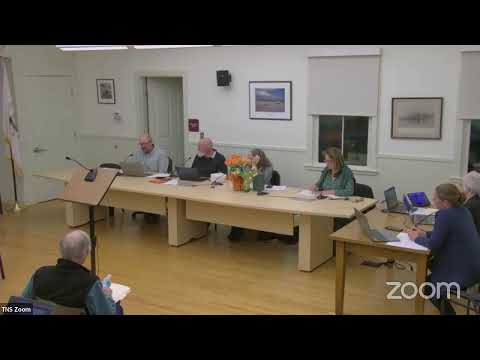
The Town Council of New Shoreham voted to adopt amendments to Article 7 (permits, procedures and enforcement), Section 7.12, governing comprehensive permits for low- and moderate-income housing, including an annual 1% limit on comprehensive-permit projects and a 3‑unit-per‑acre density bonus as proposed in the draft ordinance.
A town presenter explained that the 1% restriction reflects a legislative mechanism meant to slow the pace of for‑profit comprehensive-permit applications after some municipalities reported being overwhelmed. The presenter said the law offers a way to cap local project approvals on an annual basis so municipalities can manage workload and community impacts.
Council members questioned how the limit would apply to large proposals. One council member asked whether a developer proposing a 25‑unit project would be blocked by the limit; a presenter replied that the cap functions as an annual threshold tied to units (for example, an eighth unit in a year could exceed the town’s annual limit if the cumulative total surpasses the 1% threshold). Council members also clarified that nonprofit projects — including a 16‑unit proposal being advanced by the housing board near Paul O’Brien — are treated differently in practice and would not necessarily be constrained in the same way as for‑profit comprehensive‑permit applicants.
The council also reviewed density-bonus categories in the draft. State law sets minimum bonus levels, and the council may choose to raise them; the draft distinguishes bonuses for projects already connected to public water and sewer from bonuses for properties not currently served but that could reasonably connect. Several council members said they preferred a cautious approach on bonuses, especially given seasonal water and infrastructure pressures on Block Island, and noted council authority to change the ordinance later if conditions warrant.
A motion to approve the amendments as drafted was made and seconded. The council approved the motion by voice vote.
The ordinance change is procedural and municipal; it does not automatically authorize construction. Council members emphasized the amendment preserves flexibility: the town can delete the 1% language or adjust density bonus language at a later meeting. The council adjourned the public hearing following the vote.