Get Full Government Meeting Transcripts, Videos, & Alerts Forever!
Get email alerts on the Sewer Policy topic
No spam. Unsubscribe anytime.
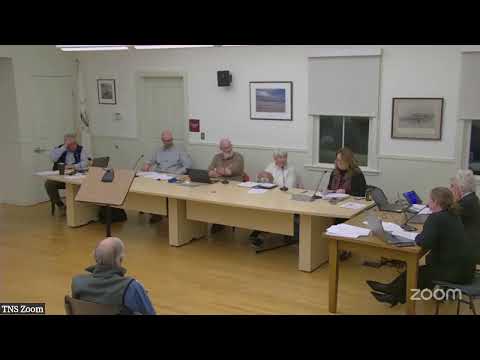
Council approves sewer‑allocation ordinance change to remove discounted rate for priority projects
Summary
The council approved an amendment to Chapter 19, Article 4 of the New Shore General Ordinances to clarify allocation calculations, remove a discounted multiplier for priority projects, update references to responsible officials, and require large allocation purchases (2,000+ gallons) be approved by the Sewer Commission.
The New Shoreham Town Council voted to approve a proposed amendment to the town’s sewer allocation ordinance that clarifies how sewer allocations are calculated and removes a discounted rate previously applied to priority projects.
Dylan Chase, introduced himself as New Shore Sewer Superintendent and presented the amendment to chapter 19, utilities, article 4, section 19‑465. The change eliminates a priority‑project multiplier (previously shown as 0.25, a 75% discount) so all allocation multipliers will be 1. The amendment also updates procedural language (removing the term "building official" to reflect current practice), redefines peak season as June through August (instead of July–September), and requires purchases of 2,000 gallons or more to be brought to the Sewer Commission for final approval.
Chase said some language referencing the facility’s design capacity (1988 figures) was being updated because the state (RIDEM) has changed design capacity over time (the presenter noted an increase from 300,000 gpd to 450,000 gpd in February 2008) and the ordinance should reference design capacity generically to remain valid after future changes.
After brief questions from council members about peak‑season calculations and procedural specifics, the council moved, seconded and approved the ordinance change by voice vote.
What it means: The change removes the discounted subsidy for public priority projects so private purchasers will pay a uniform rate; it also brings the town’s sewer allocation language into alignment with current calculation practices and requires larger allocations to receive commission review.