Get Full Government Meeting Transcripts, Videos, & Alerts Forever!
Get email alerts on the Economic Development topic
No spam. Unsubscribe anytime.
GCA pitches grant collaboration for Hope Mill; council presses for liability, permits and proof of results
Summary
Guaranteed Community Advisors (GCA) presented options for securing grant funding for Hope Mill redevelopment and related brownfield, dam and on‑site wastewater work. Council members and residents pressed for clarity on what municipal collaboration would obligate the town, examples of similar projects, and documentation of costs and permits.
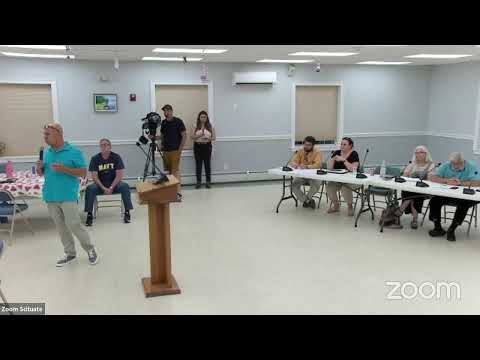
Guaranteed Community Advisors (GCA) and a Rhode Island Department of Housing representative briefed the Scituate Town Council on funding strategies for the long‑running Hope Mill redevelopment, focusing on targeting grants for brownfield cleanup, dam repair and an on‑site wastewater treatment system that developers say would lower the project’s total development cost.
Tom Fernandez of GCA described the company as a community advisory and grant‑procurement firm that does not sell construction products. “We are community advisors and our clients are municipalities, school systems, and some private side,” Fernandez said, explaining GCA’s role as a fiduciary grant writer that aims to secure non‑debt capital so communities do not need to bond or raise taxes.
Council members repeatedly pressed presenters for specifics about municipal exposure if the town signed onto a collaborative engagement. Fernandez said the engagement agreement requires a client to advance at least 33% of the project scope that GCA pursues so GCA can recoup upfront costs, and he repeatedly stated that fees are typically built into awarded grants. Several council members sought a concrete answer to “what are we responsible for? Dollars and cents,” and asked for examples of GCA’s prior brownfield and dam work. The council did not receive definitive budgetary commitments at the meeting and did not vote on a collaboration.
Developers and proponents described site priorities: brownfield cleanup (there is a $300,000 brownfield award in hand, proponents said), stabilization of the mill, gatehouse/spillway (dam) work and an on‑site wastewater treatment system. A project representative stated the owner has spent about $800,000 on design and engineering and that the project earlier received a $5,000,000 historic tax credit award in September 2022; other speakers estimated that the wastewater component could cost roughly $2.5–3.0 million, though they said some design costs have already been paid.
Council members and residents expressed concern about expired planning approvals, repeated missed deadlines and community impacts such as traffic and school district demand. Some suggested a smaller‑scale proposal would be more palatable. Multiple speakers recommended that GCA provide documented examples, copies of grant applications and clear written answers about the town’s financial exposure before the council would consider formal collaboration.
Presenters said they would provide follow‑up materials and that some federal and state grants require municipal participation to be eligible or to score higher. The council concluded the item by collecting questions and left next steps to future review rather than approving a partnership.