Get Full Government Meeting Transcripts, Videos, & Alerts Forever!
Get email alerts on the Housing Development topic
No spam. Unsubscribe anytime.
Consultants tell New Shoreham board survey and cost data show a large affordability gap; zoning and ADU changes recommended
Summary
Weston & Sampson presented survey data and cost estimates showing a sizable funding gap for affordable housing on New Shoreham, and recommended zoning changes, denser housing types, ADU policy adjustments and programmatic steps such as community land trusts and ADU support programs.
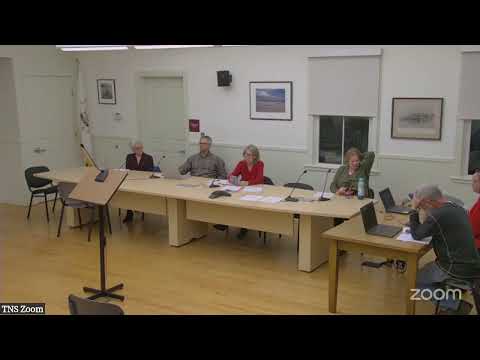
Weston & Sampson told the New Shoreham Housing Board on Dec. 17 that local survey results and market bids point to a substantial financing shortfall for affordable housing on the island. Ashley Sweet, the project manager, said the consultants would tailor regulatory and programmatic options to the town’s needs.
Elizabeth Haney summarized a 2022 housing survey with 47 respondents (about a 10% response rate of year‑round households) and said roughly 40% of respondents relocate seasonally, many report severe cost burdens and there is strong interest in deed‑restricted homeownership and more affordable rentals. "We know that the need is great," Haney said.
Consultants reviewed development costs using the O'Brien project as an example. They reported December 2023 bids near $7.5 million and estimated current total development costs closer to $10 million. Haney contrasted that total with Rhode Island Housing’s cited per‑unit development limit (about $448,000 per unit), noting the town’s likely per‑unit costs would exceed that limit by a substantial margin and thus require layered funding and policy changes to be feasible.
To reduce per‑unit acquisition and construction costs, Weston & Sampson recommended exploring more intensive yet context‑sensitive housing typologies (cottage courts, duplexes, stacked flats, manor houses) and revisiting planned‑development and density‑bonus rules so land costs can be spread across more units. On ADUs, the consultants suggested allowing smaller subdividable lots, considering condo‑style separation of ADUs or permitting ADU subdivision in limited circumstances, and creating an ADU support program that could offer pre‑approved designs, technical assistance and loan products to lower costs.
Haney and Sweet also described programmatic approaches including community land trusts (CLTs) and partnerships between conservation land trusts and housing nonprofits. They cautioned CLTs are not a silver bullet: they require sustained revenue and acquisitions to reach scale. "If you can figure out ways to fill that gap, that's when programs like community land trusts can start to add units and get to scale," Haney said.
The consultants recommended a two‑track approach: pursue regulatory changes where permitted by state law (for example, ADU enabling law establishes a minimum baseline) while simultaneously searching for revenue sources and nonprofit partners to fund acquisitions and predevelopment costs. They also advised the board to involve legal counsel before repurposing fees subject to state limits, such as impact fees.
The board welcomed the analysis as largely affirming local work and asked consultants to refine options and next steps for possible zoning amendments, ADU programs, and relationships with potential nonprofit partners. The consultants said they will coordinate with town staff and both the planning and housing boards on priorities and follow up with more detailed recommendations.