Get Full Government Meeting Transcripts, Videos, & Alerts Forever!
Get email alerts on the Agriculture Land Use topic
No spam. Unsubscribe anytime.
Board Approves Dwelling Setback Variance Near Registered Feedlot for Deerson Family
Summary
The Board of Adjustment approved a variance enabling John and Carol Deerson to build a dwelling inside standard setbacks on an active-registered feedlot parcel so the next generation can remain on the farm. Board and staff discussed how the variance could affect future feedlot expansions and how registration appears in title records.
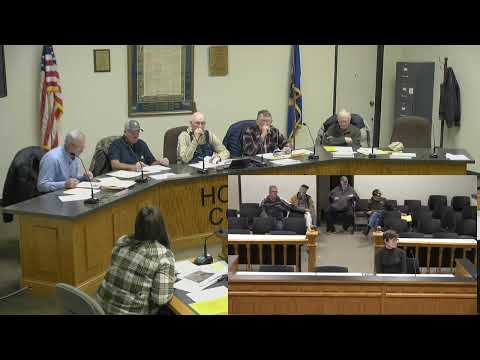
The Houston County Board of Adjustment voted unanimously to grant a setback variance that will allow John and Carol Deerson to build a dwelling on their farm property near a registered feedlot so a new generation can remain on the operation.
Applicant John Deerson told the board he and his wife and two sons operate a dairy farm and are seeking to transition the farm to their sons. He said housing options in town were limited and that keeping family members nearby is important to continued farm operations.
Staff explained the county distinguishes state feedlot registration from local zoning rules: registration can remain active even if a feedlot is temporarily empty, and county ordinance language does not clearly terminate registration after a period of inactivity. Staff said the Deersons transferred the feedlot registration when they purchased the property and noted a building permit was issued in 2020.
Several commissioners and neighbors discussed the practical trade-offs. Staff argued siting the dwelling within the setback minimizes disturbance to prime tillable acreage and steep slopes; other commissioners cautioned that granting a dwelling variance could restrict the existing feedlot’s ability to expand in the future because any new feedlot changes could then require variances.
The staff reading of the proposed variance in the transcript includes unclear numeric formatting (transcript reads "to grant a variance of 2 30 feet for a proposed dwelling within the required 13 20 foot setback for a registered feedlot"); the board voted on the motion as read. The roll-call vote was recorded as Jim Weiser — yes; Wayne Runigan — yes; Franklin Hahn — yes; Ken Anderson — yes; Ken Visker — yes.
The applicant asked whether the variance would cover future accessory structures such as a 20-by-30 storage building; staff said the variance was for the dwelling and that a storage building is typically a permitted use if property-line and setback requirements are met, so a separate variance likely would not be necessary.
Board members asked staff to ensure the variance and any permits are clearly recorded so future owners and feedlot operators understand the constraints; staff noted variances appear in title searches but cautioned that permit language cannot always prevent future disputes about expansion rights.
The board approved the variance by unanimous roll-call vote. Staff noted the hearing notice text in the packet and the advisory comments from members of the feedlot advisory committee, who generally supported generational transition.
Next steps include recording the board’s action in county records and allowing the applicant to pursue building permits consistent with the terms of the approval.