Get Full Government Meeting Transcripts, Videos, & Alerts Forever!
Get email alerts on the Behavioral Health Funding topic
No spam. Unsubscribe anytime.
Behavioral health trust fund bill faces opposition and is tabled after committee vote
Summary
Representative SJ Howell’s HB 884 to create a behavioral health trust fund and move $75 million of unspent BISFIG capital funds into an endowment and spend‑down account drew wide proponent testimony and DPHHS opposition citing duplication with the BISFIG commission; the committee tabled the bill following a roll call vote.
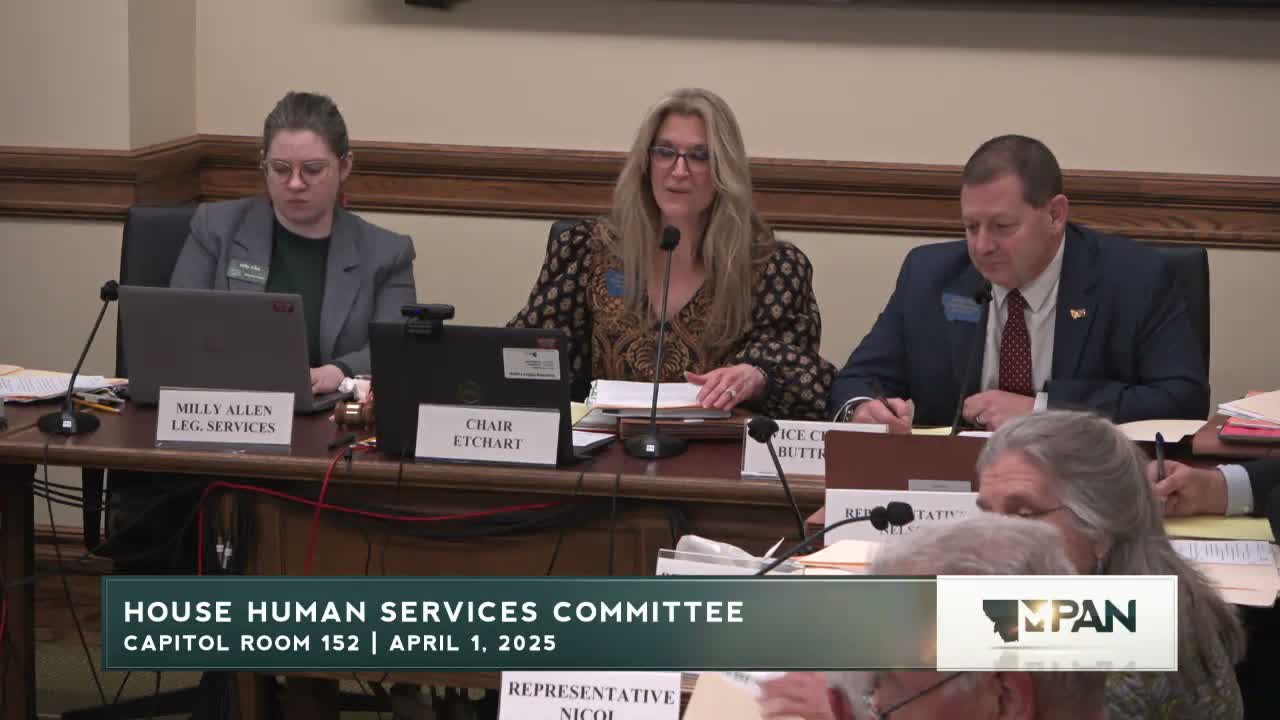
A bill proposing a Behavioral Health Trust Fund and an ongoing funding mechanism for community mental‑health services drew extensive testimony Thursday but failed to advance out of the House Health and Human Services Committee.
Representative SJ Howell explained HB 884 would create a trust fund board, an endowment and a statutory spend‑down account to move unspent capital dollars from the Behavioral Health System for Future Generations (BISFIG) capital account into community programs. Howell said the draft would transfer $75 million of BISFIG capital funds — placing $65 million into a trust to be spent from interest and $10 million into a statutory appropriation to get money out quickly.
Proponents including tribal leaders, NAMI Montana and local homelessness coalitions described persistent mental‑health and suicide challenges, argued for upstream investments such as school‑based mental‑health, crisis stabilization, jail diversion and housing supports, and urged the committee to create a dedicated, long‑term funding source.
The department opposed the bill. Megan Peel, administrator for DPHHS’ Behavioral Health and Developmental Disabilities Division, told the committee that the department and the BISFIG commission had invested significant time and stakeholder input in a set of coordinated recommendations and that moving capital funds now would duplicate or conflict with the commission’s planned multi‑year capital uses. Peel urged the committee to allow the commission’s recommendations and the governor’s budget to proceed without creating an additional administrative board.
After questions and discussion, the roll call recorded 9 ayes and 12 nays; the chair announced HB 884 had failed to pass and was tabled. Members signaling for and against the measure framed the vote as a choice between accelerating money to community programs now and preserving the BISFIG commission’s multi‑year capital plan.