Get Full Government Meeting Transcripts, Videos, & Alerts Forever!
Get email alerts on the SNAP Policy topic
No spam. Unsubscribe anytime.
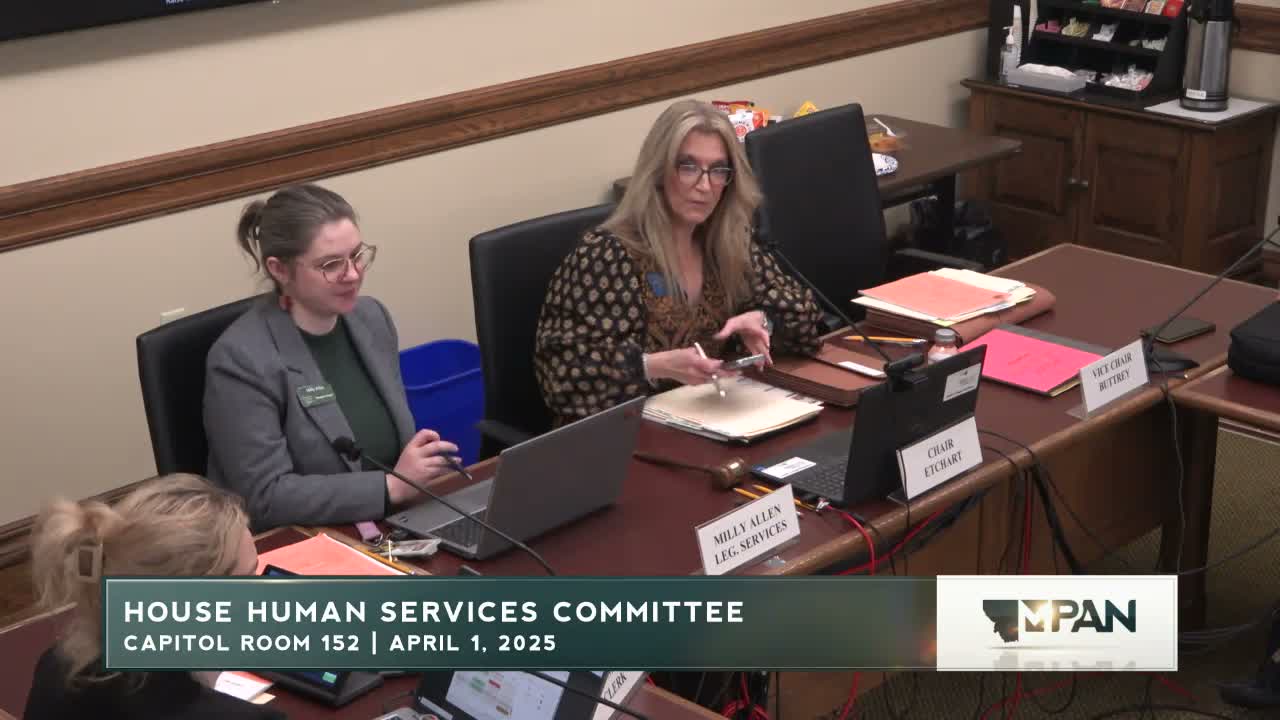
Montana committee advances bill asking DPHHS to seek USDA waiver limiting SNAP purchases
Summary
The House Health and Human Services Committee advanced House Bill 902 after a divided vote; the bill would direct DPHHS to seek a USDA waiver to restrict which items can be bought with SNAP benefits, add age limits for card use, and create a transitional benefits pilot, with a one‑time $802,000 appropriation to implement the program if the waiver is approved.
A House committee on Thursday advanced a bill that would ask the Montana Department of Public Health and Human Services to request a federal waiver narrowing the list of items purchasable with Supplemental Nutrition Assistance Program (SNAP) benefits and to add age controls on who may operate an EBT card at point of sale.
Sponsor testimony framed the proposal as a nutritional policy. The sponsor said the bill’s goal is “to encourage purchasing foods in grocery stores and preparing nutritious, quick, easy meals” and cited Montana State University Extension’s free SNAP‑Ed program as a complement. The bill would ask DPHHS to file a waiver application with the U.S. Department of Agriculture within three months of passage and includes a one‑time general‑fund appropriation of $802,000 for implementation if and when federal approval is received.
Opponents — including Kira Condon of the Montana Food Bank Network — warned the committee that restricting SNAP purchases would stigmatize recipients and could prompt some retailers to stop accepting SNAP, worsening food access in rural areas. “Any restrictions or limitations on purchases made with SNAP is unnecessary, ineffective policy that burdens small businesses and stigmatizes over 81,000 Montanans,” Condon said during public testimony.
Retail interests echoed implementation concerns. Brad Griffin, president of the Montana Retail Association, told the committee that typical stores carry tens of thousands of products and that a state‑level restrictions list would require frequent electronic updates, staff training, and customer communication to avoid confusion at checkout.
The bill also would limit EBT card use at retail outlets to household members older than 16, and create a transitional benefit to prevent an abrupt “benefits cliff” for families whose incomes rise. Supporters said the transitional provision would help recipients stay employed while gradually reducing benefits.
During executive action the committee voted to pass HB 902; the roll call recorded 11 ayes and 10 nays, and the committee reported the bill as passed to the next step. Committee members and witnesses noted the bill requires federal approval to take effect and several asked DPHHS to provide more implementation detail prior to floor consideration.
The bill record shows proponents focused on nutrition and education programs, while opponents emphasized retailer and rural access risks. The next step for HB 902 is transmittal to the full House for further consideration.