House panel advances bill that would repeal no‑strings tags for some nonresident landowners

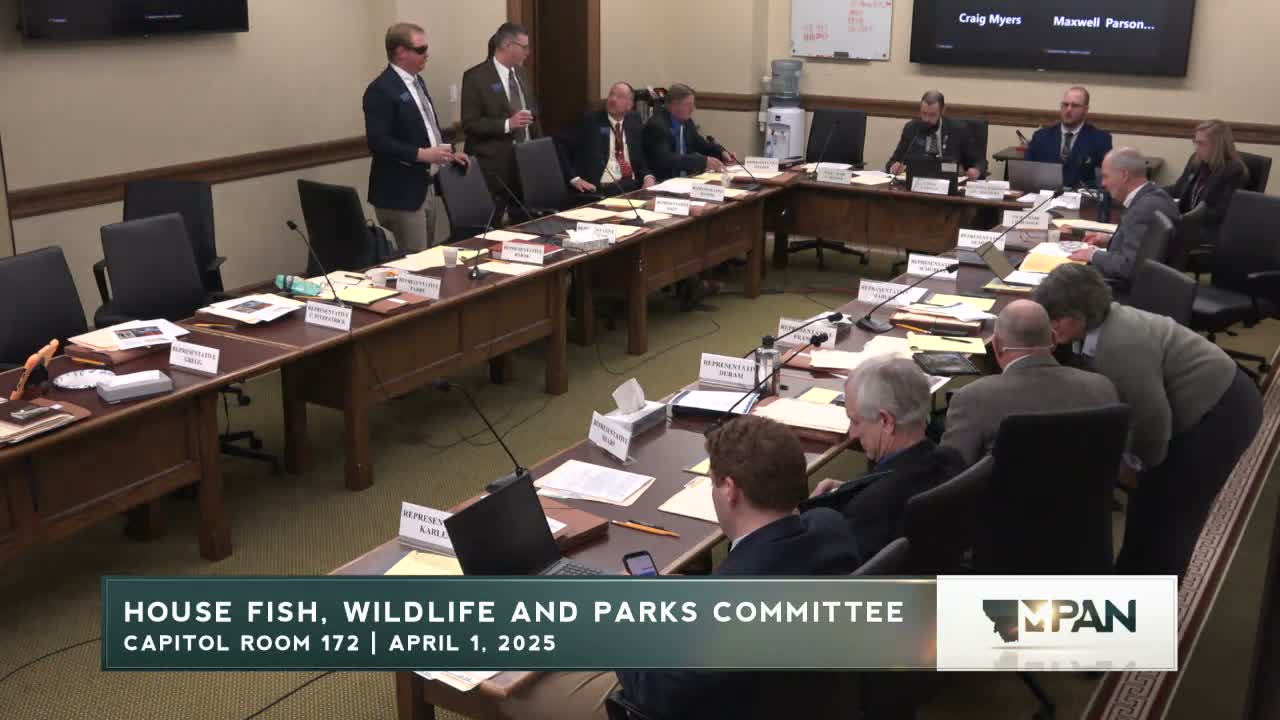
House Fish, Wildlife and Parks Committee

Loading...

AI-Generated Content: All content on this page was generated by AI to highlight key points from the meeting. For complete details and context, we recommend watching the full video. so we can fix them.

Summary

House Bill 907 would repeal a portion of last session’s HB 635 that granted nonresident landowners automatic big‑game licenses for owning 2,500+ acres and would instead offer incentives tied to enrollment in access programs (lowering the acreage threshold to 640 for bonus‑point incentives); the measure passed the committee 13–7 after extensive proponent and opponent testimony about access, conservation and unintended consequences.

House Bill 907, introduced by Minority Leader Katie Sullivan, would change the nonresident landowner preference created in last session’s HB 635 by repealing the automatic allocation of B‑10 combination licenses tied solely to owning 2,500 contiguous acres and instead retaining and reframing incentives for nonresident landowners who enroll land in department‑administered access programs. The bill lowers an acreage threshold used for bonus‑point incentives from 2,500 to 640 acres and standardizes the nonresident bonus‑point application fee at $25.

The hearing drew large turnout and sustained debate. Proponents from hunting and conservation groups argued HB 907 restores equity in license allocation and better aligns incentives by requiring landowners to participate in block management or other department access programs to receive preferential treatment. Several proponents said participation under HB 635 was low and that the program failed to deliver promised public‑access gains at scale; proponents cited the small number of nonresident landowner licenses issued in the program’s first year to argue the no‑strings rule should be corrected.

Opponents — including conservation groups, outfitters, landowner representatives and ranch managers — argued the priority pool under HB 635 is in its infancy, that many of the licenses issued were connected to access agreements, and that repealing the program could disincentivize voluntary private‑land conservation and reduce public access. Ranchers and managers described recent properties that opened access under the program and said mandating block management requirements could alienate landowners who prefer bespoke access arrangements.

FWP’s licensing bureau chief, Emily Cooper, provided informational answers and clarified program mechanics: HB 635 established a priority pool that reserves 15% (2,550) of the 17,000 nonresident B‑10 combination licenses; applicants are reviewed by FWP and applications are handled by licensing staff. Cooper said 131 licenses had been issued under the priority pool and that 30 of the landowners had purchased an extra bonus point (i.e., had also participated in an access program); she offered to provide region‑level acreage and hunter‑day metrics later. Testimony revealed confusion about statutory subsections and how bonus‑point provisions interact with the priority pool; several members called for FWP to provide further data.

After extended questioning and debate about conservation incentives, access, and the risk of transferable tags or unintended subdivision to meet acreage thresholds, the committee voted 13–7 to advance HB 907 to the floor. Several members emphasized the need for FWP to compile more detailed data about how many acres and hunter‑days were actually made available to the public under the program for the committee’s interim review.