Get Full Government Meeting Transcripts, Videos, & Alerts Forever!
Get email alerts on the Community Health Workers topic
No spam. Unsubscribe anytime.
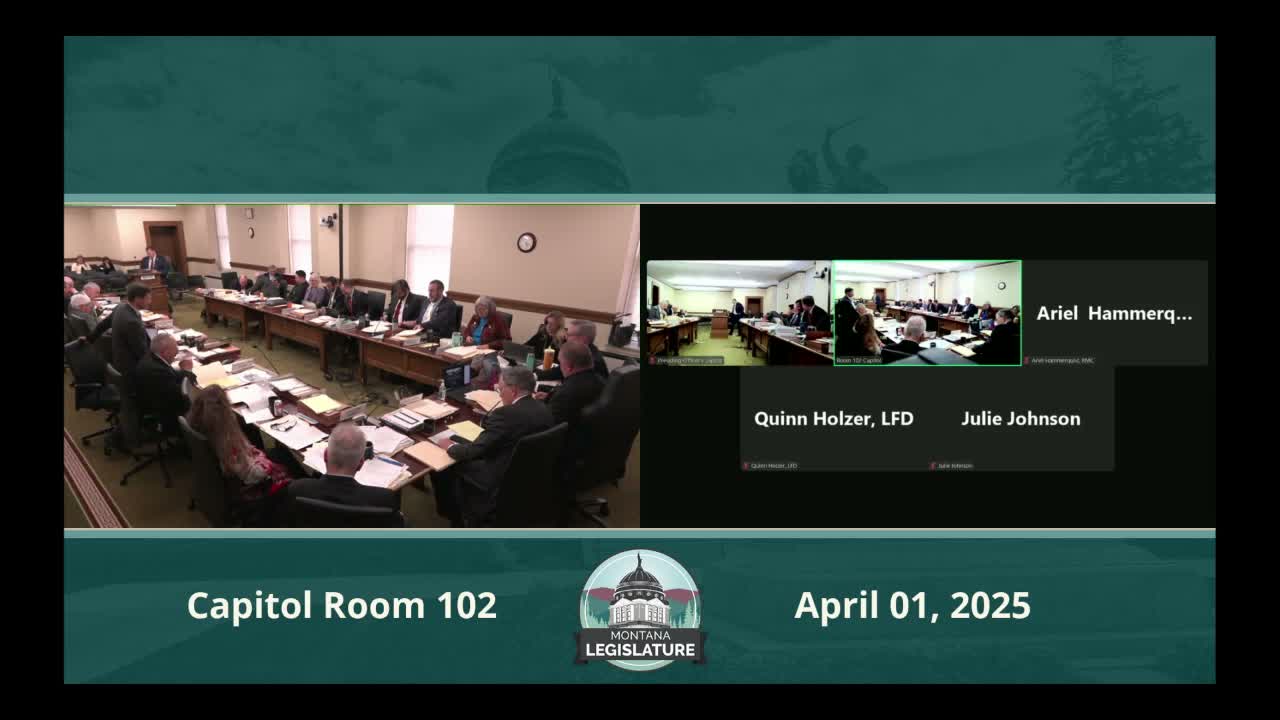
Committee hears bill to license community health workers; sponsor says Medicaid reimbursement will be optional
Summary
Representative Ed Buttrey asked the committee to create state licensure for community health workers and to allow DPHHS to reimburse CHW services under Medicaid only if it can do so within existing resources; proponents said licensure would standardize training and allow private and public payers to reimburse CHWs.
Representative Ed Buttrey presented HB 850 to create a state license for community health workers (CHWs) and to authorize the Department of Public Health and Human Services to pay for CHW services via Medicaid only if the department can do so within existing resources. "These workers serve as liaisons between health care and social services in the community," the sponsor said, describing CHWs’ roles in navigation, care plans and reducing emergency‑room use.
Proponents — including Stacy Anderson (Montana Primary Care Association) and Commissioner Sarah Swanson (Department of Labor and Industry) — told the committee that Montana already has two CHW certification programs (University of Montana and Montana State University) and that licensure would allow private insurers and Medicaid to reimburse CHW services and improve portability for workers moving between systems. The Department of Labor estimated one‑time rule‑making and IT costs for licensure at about $38,500 in year one.
Committee members pressed for implementation details: how CHWs would be treated under prospective payment systems for federally qualified health centers and rural health clinics, whether Medicare already covers CHW services, and how a state certification would interact with tribal community health representatives. Proponents said CHWs could be paid fee‑for‑service if they work for FQHCs/RHCs and that certification language was adapted from other states and existing university programs. The bill includes a provision that Medicaid payment is allowed only if DPHHS can make it work within its current budget, which proponents said significantly reduced fiscal risk for the state.
The committee did not take final action on HB 850; members requested more detail on payment mechanisms and the relationship to existing tribal and federal programs.