Get Full Government Meeting Transcripts, Videos, & Alerts Forever!
Get email alerts on the Public Service Commission topic
No spam. Unsubscribe anytime.
Senate committee advances bill to change how Montana selects Public Service Commission members
Summary
A committee bill would replace the five-member elected Public Service Commission with a hybrid board of two elected commissioners and three gubernatorial appointees confirmed by a two‑thirds Senate vote. Sponsor framed the change as increasing technical expertise and reducing litigation risk.
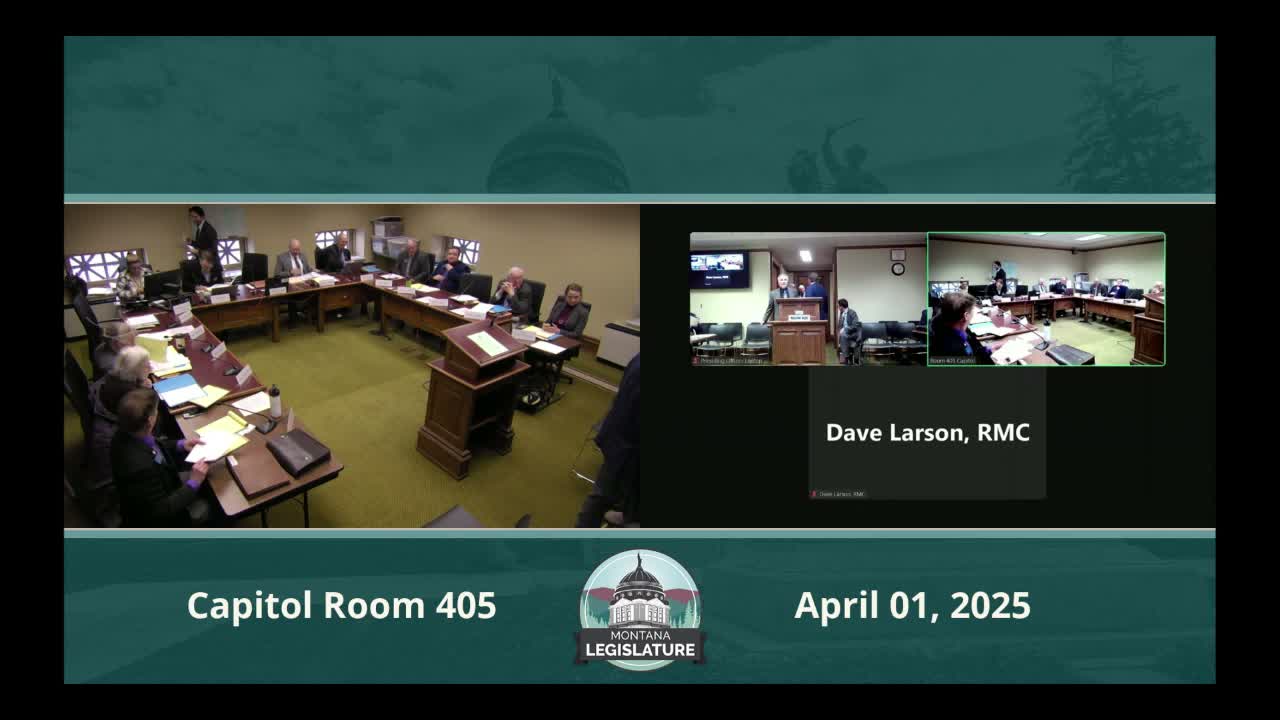
Senate Energy Committee members heard, and later advanced in executive action, a committee bill that would alter how Montana selects members of the Public Service Commission (SB 561).
The sponsor described the bill as a compromise that would keep two elected commissioners — representing each congressional district — while creating three governor-appointed seats that require Senate confirmation by a two‑thirds vote. The sponsor said the appointees would be required to have substantial technical or industry-related experience and would be subject to conflict-of-interest restrictions, including a four‑year separation from entities regulated by the commission. "A senate confirmation would require two thirds of the Senate," the sponsor said when outlining the confirmation standard.
Proponents speaking in the hearing praised the change as a way to depoliticize the commission and bring expertise to its decisions. Charles Robinson of the Montana Chamber of Commerce said the two‑thirds confirmation requirement "strengthens the effort to reform the Public Service Commission" and would emphasize competence and experience over politics. No in‑room opponents testified during the hearing.
Supporters told the committee they had seen inconsistent regulatory outcomes and protracted rulemakings, and argued the change could reduce litigation and encourage decisions grounded in technical records. The sponsor cited past experiences when rules implementing earlier legislation took years to complete and said that a more technically qualified panel would help avoid lengthy appeals.
In executive action, the committee moved the bill forward (motion recorded in committee minutes) after brief discussion and a voice vote. Several senators recorded objections on the floor during the EA vote, with at least four members publicly stating they would oppose the bill in its current form based on concerns about longer appointed terms and creating two classes of commissioners.
What happens next: SB 561 was advanced by the committee to the next stage; any future floor action will include recorded roll calls on final passage and potential amendments.