Get Full Government Meeting Transcripts, Videos, & Alerts Forever!
Get email alerts on the Lab Grown Meat Ban topic
No spam. Unsubscribe anytime.
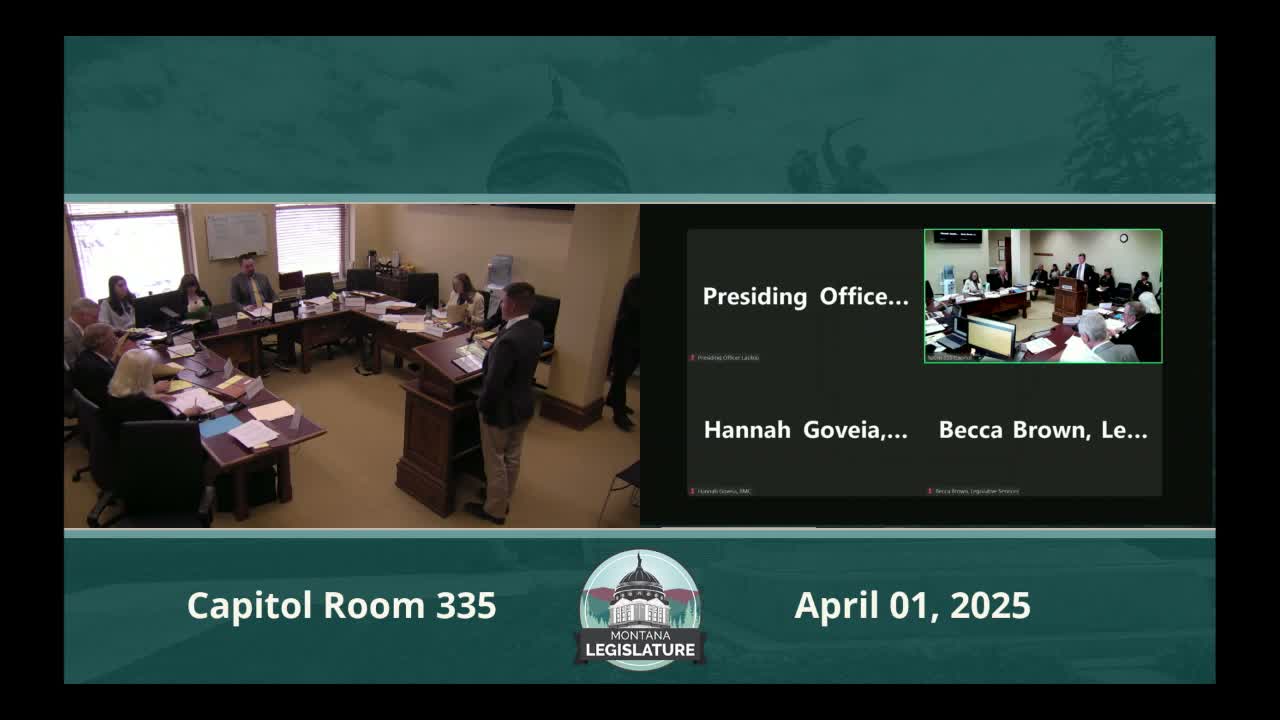
Senate committee sends bill to ban sale and manufacture of lab‑grown meat out of committee, 10‑1
Summary
The Senate Agriculture, Livestock & Irrigation Committee voted 10‑1 to pass House Bill 401, which would prohibit manufacture, sale and distribution of cell‑cultured (lab‑grown) edible products in Montana; proponents raised health and economic concerns and the Department of Livestock provided regulatory context.
The Senate Agriculture, Livestock & Irrigation Committee voted 10‑1 to pass House Bill 401, a measure introduced by Representative Braxton Mitchell that would prohibit the manufacture, sale, holding for sale or distribution of cell‑cultured edible products in Montana.
Sponsor Mitchell told the committee the bill is intended to protect traditional agricultural markets and public health while regulators and scientists evaluate long‑term safety. Proponents who testified included Randon Gregg, who characterized the production process as ethically and practically concerning, and representatives of agriculture trade groups who emphasized potential economic impacts for Montana ranchers.
Mike Honeycutt, executive officer for the Montana Department of Livestock, gave informational remarks about how regulatory responsibility would work if such products reached the market. He said federal agencies (the Food and Drug Administration and USDA’s Food Safety and Inspection Service) have roles in the lab and post‑lab stages respectively, and that state enforcement of a ban would rely on retail food codes administered by the Department of Health and Human Services; the Department of Livestock has a cooperative inspection role for meat and poultry where applicable.
Committee members asked about market availability and safety data; Honeycutt said cell‑cultured products remain largely in test environments and are not widely commercially available, and that production costs currently keep such products from being mass‑market. Senator Dunwell and others raised concerns about future food‑security implications, while other members expressed support for preemptive restrictions.
After executive action the committee recorded a roll call with 10 ayes and 1 nay, advancing the bill out of committee. The sponsor said a floor carrier was lined up should the bill continue to move.
What’s next: HB401 passed the committee and will proceed according to the legislative calendar; further floor action will follow if the bill is scheduled for consideration.