Get Full Government Meeting Transcripts, Videos, & Alerts Forever!
Get email alerts on the School Funding topic
No spam. Unsubscribe anytime.
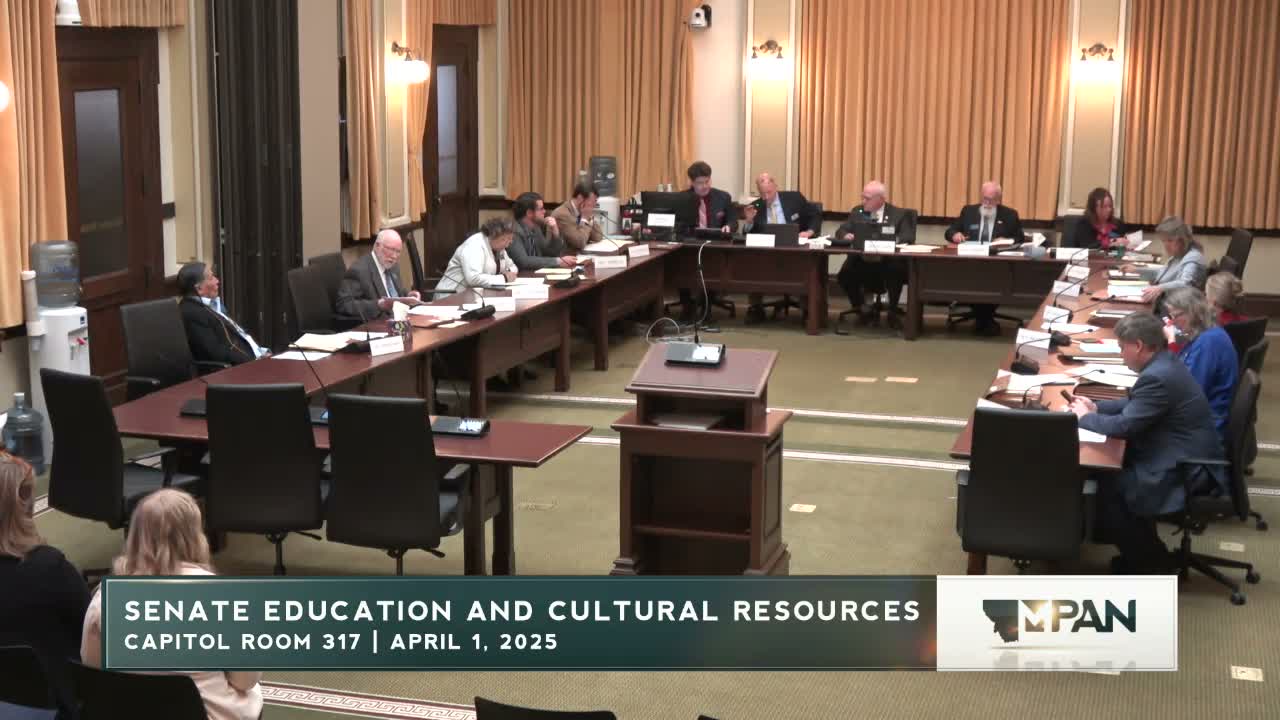
Senate Education Committee advances bill to expand 10-year school funding study and restore public members
Summary
The committee amended and passed House Bill 153 to broaden Montana27s decennial school funding study to include a working group on excellence and innovation, revise appointments and membership, and provide a small appropriation to start work before July 1; the committee vote was 9-5.
The Senate Education Committee voted to pass House Bill 153, which expands Montana27s decennial study of school funding to create a working group on excellence and innovation in education and revises the commission27s membership and appointment timing.
Mister McCracken, committee staff, told senators the bill "expands the focus of the upcoming decennial study to include a working group on excellence and innovation in education" and provides a small appropriation "to allow the commission to begin its work in this fiscal year prior to July 1." That appropriation is intended to let the commission meet in May and June, the staff said.
The committee debated amendments to membership language and party balance. One amendment removed some mandatory legislative members and left six House and six Senate appointments to leadership while restoring four public members. Vice Chair Novak said she supported reinstating public members but urged those public members be drawn from different regions and school sizes to ensure diverse perspectives. Senator Emmerich opposed removing party-balance language, calling it a potential conflict of interest if legislative members appointed themselves to a commission that would examine the legislature's funding choices.
After a conceptual amendment to restore explicit bipartisan allocation for the six legislative seats passed, the committee approved further sponsor-proposed language on transition appointments and the scope of considerations for a new funding model. Sponsor supporters described the changes as preserving public participation while allowing leaders to make appointments.
The final roll call on the motion to report HB153 as amended carried 9-5. The committee27s action forwards the bill with three amendments; senators indicated they will carry the measure to the floor for further consideration.
The committee also discussed next steps for drafting any floor amendments to adjust language on regional public members.
Outcome: House Bill 153 as amended was reported by the Senate Education Committee (9 aye, 5 nay).